Monday, 20 June 2011

Passports - The Final Chapter?

From The Scavenger:
A transsexual woman has won the right to a full, 10-year passport in her transitioned identity, without the need for undergoing sex realignment surgery first.
...
In November 2010 after transitioning full time for just on one month, I consulted with my sex and gender therapist about how I could adjust my passport as I was required to travel overseas for business.

After receiving a letter from her indicating my change, I put together two statutory declarations, one from my business partner indicating my change and that was accepted by all our customers, and the other from myself indicating I was indeed transitioned full time. I then arranged for an appointment with the Passport Office to work with them to make the change.

I was warned ahead of time there might be issues and there were.

I live in Canberra and have been here most of my life. I have spent five years working in the public service and most of the other time contracting or consulting to them. I have friends who work in the public service. What one needs to note is that this isn't a game of chess when dealing with them, it’s much different, and I knew from the beginning that I had to ensure I was tackling their procedures and not the people working there.

As I discovered from my first meeting with them, they were polite, helpful and sincere in their dealings, it was just they were not trained or had any knowledge in what sex and/or gender identity is and how to understand transsexuals and why this was so important to us. What was missing and it was very obvious, was a lack of training and knowledge in anything sex and/or gender diverse.
It took her 7 months. It took me 20. But at least now we've gotten rid of the anomaly that some of those born overseas could qualify for Australian Passports, while those in exactly the same situation but born in Australia could not.

The case only lasted 7 months, about a third of mine. But it involved considerable expense, more even than mine. And the APO fought every step of the way. Count the number of knock-backs:
After my first meeting with the Passport Office, I was given a verbal decline for a full passport stating female in just 30 minutes because I was not booked for and showed no intention of having genital surgery.
That's one.
At this point I started on the paperwork. I knew it was important to keep a paper trail and I ensured everything said and done was documented, catalogued and tracked.

My history of events was going to be more accurate than theirs. So I requested another formal meeting. This time attending with three official letters of procedural complaint and one commendation to the original staff member who was legitimately sincere and polite in her dealings with me. There were two officials in attendance and it was a formal meeting.

The letters of complaint about their procedures related to the Passports Office’s website, which was incorrect and misleading and how my initial dealings with them were incorrectly handled. A couple of weeks later I received an official response denying my request, citing reference to the Passport Act and my birth certificate not matching my passport.
That's two.
I also didn't satisfy the “rare and unique circumstances of a compelling humanitarian nature”, which they said gave them discretion in such decisions on case by case basis.

I appealed the decision immediately citing prior cases and concerns about my safety in having to travel on a passport that did not reflect my gender identity and presentation. I requested an impartial mediator because I didn't believe my case was being heard fairly.

I also pointed out their obvious lack of knowledge and requested information about how I was judged on humanitarian guidelines. I felt confident with the appeal....
...
My appeal was rejected on the same grounds as before.
That's three.
I rang their legal counsel regarding the appeal and realised very quickly that their level of knowledge regarding the sex and/or gender diversity was non-existent. Yet they had made these decisions. They refused to acknowledge risks to my safety when travelling on a passport that did not reflect my gender identity and presentation and insisted I use a Document of Identity (DOI) like other transsexual and transgendered people.
A document that amongst other things, does not allow travel to the USA, and does not guarantee a right of return back to Australia. You can leave the country.... but it could be a one-way trip, and there aren't many places you can go to.
It was then agreed during a phone call that they would answer any further questions I have in writing. Within two hours I submitted four pages, requesting information about their skill set, training and knowledge, what methods they used for determining humanitarian guidelines. I requested detailed reasoning why I needed answers before my appeal.

My questions were never answered and with one week to go I put in the appeal request to the Federal Government Administrative Appeals Tribunal (AAT). I had to pay a large fee up front and I requested a skilled and impartial person to handle it.
I had the same experience - formal letters requesting reasons for the decision not being answered. They're supposed to, to be compliance with the Administrative Appeals (Judicial Review) Act, if you write a letter like this:

Dear Sir/Madam,

In accordance with ADMINISTRATIVE DECISIONS (JUDICIAL REVIEW) ACT 1977 - SECT 13, please furnish a statement in writing setting out the findings on material questions of fact, referring to the evidence or other material on which those findings were based, and giving the reasons for the decision not to grant my passport application.

Yours Sincerely, etc etc


Getting back to the case in hand:
Realising that if I didn't do this, others would share a similar fate because the precedent was currently in the negative, I lodged the appeal and caught the Passport Office off guard as they referred to me in paperwork as female. I did succeed in getting a further small victory in that the Passport Office admitted in writing they had no procedures for determining what humanitarian guidelines one can be judged against.
Actually... I think that's a pretty big victory, and likely to have considerable legal weight.. but to continue:
At my preliminary hearing there were two lawyers, one a partner, representing the Passport Office. Intimidating – yes, but it worked well for me. I realised my case was more important and warranted more attention than I was led to believe. The Department didn't want to lose and they were using excessive legal muscle to ensure it.

The case went from a simple one of wanting to change one letter on my passport to ensure my safety when I travelled, into one now which looked absurd. Here I was, no legal skill, just fighting for my safety when I travelled, up against a government department sending in two lawyers to push their case.
...
I felt at all times that this case was not about winning or showing up the Passport Office. That wasn't my goal. My aim was to help them understand that the implementation of procedures and guidelines were causing harm to those transitioning.
...
Eventually after the preliminary hearing Passport Office conceded the case and it was settled with them issuing me with my 10-year female passport.
And some advice:
In cases such as mine, I advise people to follow their procedures to the letter, document what happens and let them know when the procedures fail. Focus on the procedures and guidelines, not the individuals. Always look for win/win situations and understand who you are dealing with. Be open and honest, do not be deceitful. Do your best not be bullied by bureaucratic procedures and stay strong because you are not alone.
And don't take "No" for an answer.

Trans women who transition late tend to have a certain stick-to-it-iveness. A certain persistence, sometimes taking that to extraordinary lengths. If they didn't, then they wouldn't have transitioned late, they would have transitioned early or died. That even applies to certain women who are technically Intersex rather than Transsexual...

It's not that it doesn't hurt. Here's what I wrote at the time things like this were happening to me:
It's important to step back, and think about what this whole situation is about.

It's about simply getting a Passport, something that by the Australian Passport Act, every Australian has a right to. I'm no Criminal, nor someone with dodgy citizenship, nor a Passport Trafficker or Terrorist. I already had a UK passport with the same correct details in. I needed to go overseas for surgery, there was a growing risk of cancer. I have a congenital medical problem, nothing particularly unusual, and that's all.

At a time when I was under great stress, when I was most vulnerable, I was treated worse than a Murderer - they can get passports. I was ordered to Divorce before a passport would be granted, something that was a gross abuse of power, and blatantly discriminatory. Had I not recorded it on my blog, as it happened, it would seem unconceivable that anyone could be treated this way.

For many months I faced the possibility that I would not be allowed back in the country to see my little son. The sleepless nights, the vast amounts of time spent writing letters, or waiting (sometimes for hours) at the Passport Office, all that was totally un-necessary. Pain and Suffering is an exact description of what was inflicted on me. I think many in a similar situation would not have coped. I came very close to losing it, as was reflected in my writings.

Now that there may be some light at the end of the tunnel, I can let my outrage at being treated like dirt show. I'm crying now, trying to get rid of the pain, the anguish, the frustration at the unreasonable and unconscionable conduct of some of those who had me at their mercy. HOW DARE THEY DO THIS TO ME? I'm Human.

I'm Human. I'm human. No human being should be treated like that.

I intend to make sure they don't ever do it again. That they never order anyone to Divorce. Victimised, I refuse to be a Victim. They don't have my permission to de-humanise me.
And so thanks to a very brave and persistent woman, who took them to Court - something I didn't have to do - there's been another step forward.

I just hope we don't have to go through this all again. They need some training, this is a systemic problem.

But if we do... then we will, and every single bit of caselaw helps.

Sunday, 19 June 2011

Transgender Health Care - The Reality

From Dallas Voice : Who decides what is "Medically Necessary"?
“Transition-related care” can be divided into two parts, Keisling said: the costs directly related to gender reassignment surgery, and the other treatments and services that are related, things like checking hormone levels, lab tests, and mental health services associated with the transition process.

“Even someone who has fully transitioned probably still needs to get her hormone levels checked on a regular basis. And insurance companies will deny those claims by saying they are ‘transition-related,’” Keisling said.

This is also the issue of sex-specific care, she continued. After transitioning, a trans woman will qualify for regular mammograms, but not for regular prostate exams — which she still needs, too.

And a lot of trans men face similar difficulties, Keisling said. “A trans man might need a pap smear or some other kind of gynecological care, and they are often told no, insurance won’t cover that,” she said.

She described another case in which a trans man was told by his doctors that he was facing serious gynecological problems and needed to have a hysterectomy. Because he was trans, however, insurance wouldn’t pay.

“Insurance said, ‘No. We don’t pay for sex-change operations. The doctors said this is transition surgery. This is a medically-necessary procedure.’ But they wouldn’t pay,” she said.

But in some cases, the discrimination is even more blatant.

“The insurance for federal government employees specifically excludes coverage for the costs of [gender reassignment surgery], but there have been a number of cases where that was used to exclude coverage of any type for transgenders,” Keisling said.

“I know of a federal employee who was told insurance wouldn’t pay for care for her son’s broken arm because she was transgender. Another trans woman who was anemic and needed transfusions was told insurance wouldn’t cover the treatments because she had ‘transsexual blood,’” she said.

“The list goes on and on. I know another trans woman who was playing for a woman’s softball team and broke her arm during a game,” Keisling continued. “She went to the hospital, had the X-rays and got her arm set. Then the insurance company turned around and denied the claim. They said if she weren’t transsexual, she wouldn’t have been out there playing for a women’s team and she wouldn’t have broken her arm.”

When it comes to these “really egregious stories” that are “so clearly wrong,” Keisling said, the victims can hire lawyers and get remedies through the courts. Still, she said, “You have to know what to do, how to get things fixed.” And court cases aren’t cheap, either.
In a car crash and break your leg? That's not covered, as the bones could be weakened from HRT therapy. Or if you don't take hormones, they could be weakened because you don't. In either case, "transition-related" according to some Insurance company's rules. And of course, since the evidence is it's congenital, it's a "pre-existing condition".

That's in the USA. Here in Australia, Medicare just changes the patient's records from M to F and back again as necessary when it comes to Intersexed and Trans people. Yes, it's silly, makes a mockery of the whole system - but a humane work-around to prevent inhuman treatment.

Friday, 17 June 2011

The (Lack of) US Manned Space Program

From SpaceNews: Memo Marks Official End of Constellation:
A senior NASA official has signed the formal death warrant for the Constellation deep space exploration program even as work proceeds on one of Constellation’s legacy development efforts and agency officials continue to ponder the fate of another.

“I have signed the letter to close out the Constellation Program,” Douglas Cooke, associate administrator for NASA’s Exploration Systems Mission Directorate, wrote in a June 10 memo.
I've written about the wastage and fiscal mismanagement before, but maybe this graphic shows the situation best:


From another previous post :
NASA has spent more than $9 billion on development of the Constellation project and the Ares rockets over the last six years. President Obama's fiscal 2011 budget would end funding for the Constellation Systems program, initiated by NASA in 2005 to return astronauts to the Moon by 2020 and later to Mars. The administration says the program is behind schedule and cannot achieve its goals without budget increases. Constellation would need an additional $3 billion annually beyond fiscal 2010.

Now Constellation needed mending with a new one. But now it's clear that to Obama, it's all about "US Pride" and "Showing the Flag". Prestige. Basically, one huge publicity stunt. Not about colonisation. Not about using our disabled twin planet as a testing ground for how to live off-Earth.
Why are all concrete plans for further crewed space exploration now cancelled?
Obama sought to explain why he aborted President George W. Bush's return-to-the moon plan in favor of a complicated system of public-and-private flights that would go elsewhere in space, with details still to be worked out.

"We've been there before," Obama said of the nation's moon landings decades ago.
As reported over a year ago.

Constellation needed killing. It was a product of the pork-barrelling "business as usual" that bedevils Congress's financing of space exploration. Split the work so the pork is spread evenly - thus waking everything vastly inefficient. Listen to what the engineers say regarding how much money they will need - then give them half of that. Then spread the payments out over many years, to increase the costs yet more.. and finally kill the project, as it never stood a chance of working anyway without more funding.

Constellation also needed replacing with something more concrete than Unicorns and Rainbows. In one way, it has been, just not a US program - the next man to step foot on the moon will be speaking Mandarin.

Thursday, 16 June 2011

Note to Self

In my experimentation with meta-genetic algorithms to optimise a Pareto set, be careful that I don't end up with suboptimality in other areas not under consideration.


A lot of my work is based on some research I did in making an artificial intelligence for anti-missile defences over 15 years ago. I guess I was lucky, inasmuch as I used a rules-based system and not a neural net.

On the other hand, the fault-tolerance and self-healing properties I put into FedSat, and helped the MESSENGER spacecraft team with, have proven to be useful in space exploration. I skipped over Terminator-I and went straight to Terminator-II, or as I once wrote, skipped the Battleship approach, armoured but brittle, in favour of "Beware of the Blob".

Wednesday, 15 June 2011

Sexual differentiation of human behavior: Effects of prenatal and pubertal organizational hormones

Sexual differentiation of human behavior: Effects of prenatal and pubertal organizational hormones Sheri A. Berenbaum, Adriene M. Beltz Frontiers in Neuroendocrinology 32 (2011) 183–200
A key question concerns the extent to which sexual differentiation of human behavior is influenced by sex hormones present during sensitive periods of development (organizational effects), as occurs in other mammalian species. The most important sensitive period has been considered to be prenatal, but there is increasing attention to puberty as another organizational period, with the possibility of decreasing sensitivity to sex hormones across the pubertal transition. In this paper, we review evidence that sex hormones present during the prenatal and pubertal periods produce permanent changes to behavior.
There is good evidence that exposure to high levels of androgens during prenatal development results in masculinization of activity and occupational interests, sexual orientation, and some spatial abilities; prenatal androgens have a smaller effect on gender identity, and there is insufficient information about androgen effects on sex-linked behavior problems. There is little good evidence regarding long-lasting behavioral effects of pubertal hormones, but there is some suggestion that they influence gender identity and perhaps some sex-linked forms of psychopathology, and there are many opportunities to study this issue.
TLDR version - it's complicated. Here, let me give an example:
Sex matters for human behavior as it does for behavior in other species. Human males and females differ in many ways, including their appearance, their social identity, their social partners, the activities that interest them, how they present themselves to others, their aspirations and values, the likelihood of experiencing psychological and physical health problems, and the specific form in which those problems are manifested (reviewed in [20]). A key question concerns the causes of those differences, particularly the ways in which they are shaped by genes, physiology, and socialization.
The focus of this paper – in line with the other papers in this special issue of Frontiers of Neuroendocrinology – concerns the extent to which human behavioral sex differences are influenced by sex hormones present during sensitive periods of development acting to organize the brain.
More than 50 years ago, Phoenix et al. [130] provided an experimental demonstration in female guinea pigs that early exposure to androgens masculinized sexual behavior. This revolutionary work opened a new era in understanding sexual differentiation of behavior and led to thousands of studies in many species showing
unequivocally that sex hormones present early in development affect sexual differentiation of behavior as well as reproductive anatomy and function [166]. These hormones are said to have ‘‘organizational’’ effects because they produce permanent changes to brain structures and the behaviors they subserve. They are contrasted with ‘‘activational’’ effects, that is, hormones acting later in life to produce temporary alterations to the brain and behavior (through ongoing changes to neural circuitry) as the hormones circulate in the body throughout adolescence and adulthood. The main distinctions between organizational and activational effects concern timing and permanence, although these distinctions are not absolute [3].
Organizational effects have generally been considered to occur early in life when the brain is undergoing rapid change, but there has always been consideration of potential other sensitive periods of brain development when sex hormones again act to induce permanent changes [166].
Recent work in nonhuman animals has focused attention on other particular periods when there are substantial – and relatively abrupt – changes in levels of sex hormones, and that might serve as additional opportunities for hormones to sculpt brain structure: puberty and pregnancy (e.g., [91,149]). In this paper, we consider how human psychological sex differences are influenced by organizational hormones during prenatal development and again during puberty. We consider the foundations of the work, the methods used to study the question, the evidence that prenatal and pubertal hormones produce longterm behavioral changes, and directions for future research.

[20] J.E.O. Blakemore, S.A. Berenbaum, L.S. Liben, Gender Development, Psychology Press/Taylor & Francis, New York, 2009.
[91] C.H. Kinsley, L. Madonia, G.W. Gifford, K. Tureski, G.R. Griffin, C. Lowry, J. Williams, J. Collins, H. McLearie, K.G. Lambert, Motherhood improves learning and memory: neural activity in rats is enhanced by pregnancy and the demands of rearing offspring, Nature 402 (1999) 137–138.
[130] C.H. Phoenix, R.W. Goy, A.A. Gerall, W.C. Young, Organizing action of prenatally administered testosterone propionate on the tissues mediating mating behavior in the female guinea pig, Endocrinology 65 (1959) 369–382.
[149] C.L. Sisk, J.L. Zehr, Pubertal hormones organize the adolescent brain and behavior, Front. Neuroendocrinol. 26 (2005) 163–174.
[166] K. Wallen, The organizational hypothesis: reflections on the 50th anniversary of the publication of Phoenix, Goy, Gerall, and Young (1959), Horm. Behav. 55
(2009) 561–565.
So far, so good. Relatively simple. But when you get further into it...
Data confirming the importance of pubertal hormones in gender identity comes from outcome studies of children with gender identity disorder, showing that the majority develop gender typical identity in adolescence and adulthood, although many continue to display sex-atypical characteristics. An early study of extremely feminine boys showed that most developed a homosexual orientation without gender dysphoria [64]. Two recent studies confirm that most children with gender dysphoria do not remain dysphoric after puberty. In one follow-up study of girls with gender identity disorder in childhood, only 12% were found to have gender dysphoria in adulthood; most developed a heterosexual orientation without gender dysphoria, although there were elevated rates of nonheterosexual orientation [48]. In another study of boys and girls with gender dysphoria in childhood, 27% of boys and 64% of girls were still gender dysphoric, and most had nonheterosexual orientation [167]. Both studies showed evidence of a ‘‘dosage’’ effect: children with more childhood cross-sex behavior or gender dysphoria were more likely to be gender dysphoric at follow up.
(This may explain why girls were more likely than boys in the second study to persist in dysphoria; they probably had to be more extreme to receive a diagnosis in the first place.) Additional evidence for the importance of puberty in gender identity comes from data showing reduced plasticity with age: individuals diagnosed with gender identity disorder in adolescence are more likely than those diagnosed in childhood to have persistent dysphoria into adulthood [172].
Nevertheless, testosterone at puberty is not essential for male gender identity. There are cases of male gender identity in individuals with male-typical chromosomes and prenatal androgen exposure who were castrated in early life and reared as girls because of genital defects (such as cloacal exstrophy or penile ablation [44,111,133]). Some typical girls develop gender dysphoria or male identity at puberty without any obvious exposure to testosterone [174].

[44] M. Diamond, H.K. Sigmundson, Sex reassignment at birth: long-term review and clinical implications, Arch. Pediatr. Adolesc. Med. 151 (1997) 298–304
[48] K.D. Drummond, S.J. Bradley, M. Peterson-Badali, K.J. Zucker, A follow-up study of girls with gender identity disorder, Dev. Psychol. 44 (2008) 34–45
[64] R. Green, The ‘‘Sissy Boy Syndrome’’ and the Development of Homosexuality, Yale University Press, New Haven, CT, 1987.
[111] H.F.L. Meyer-Bahlburg, Gender identity outcome in female-raised 46,XY persons with penile agenesis, cloacal exstrophy of the bladder, or penile ablation, Arch. Sex. Behav. 34 (2005) 423–438.
[133] W.G. Reiner, J.P. Gearhart, Discordant sexual identity in some genetic males with cloacal exstrophy assigned to female sex at birth, New Engl. J. Med. 350 (2004) 333–341.
[167] M.S. Wallien, P.T. Cohen-Kettenis, Psychosexual outcome of gender-dysphoric children, J. Am. Acad. Child Adolesc. Psychiat. 47 (2008) 1413–1423.
[172] K.J. Zucker, Gender identity development and issues, Child Adolesc. Psychiat. Clin. N. Am. 13 (2004) 551–568.
[174] K.J. Zucker, S.J. Bradley, Gender Identity Disorder and Psychosexual Problems in Children and Adolescents, Guilford, New York, 1995.
Paper [48] is flawed because the definition of "Gender Dysphoria" was far too relaxed; few met the actual criteria, and many were Intersex. Paper [64] is currently enmeshed in the controversy about the aversion therapy techniques used at UCLA - torturing children, basically - and the revelation that much of George Reckers work there was grossly flawed or even fraudulent. Green seems to have taken a second look at the subject though, to try to report on the actual situation rather than one seen through ultra-conservative fundamentalist eyes.

Doing good Science is hard enough without such complications, especially in an area so complex.

Summary: Post-natal hormones do have an effect on gender identity. Sometimes. Not always. And pre-natal hormones have an effect on gender identity. Sometimes. Possibly always. And it's dosage-dependant, and associated with other neural circuitry (usually) and sexual orientation (sometimes). I'd quote more, but I'm already close to the limits of "fair use" of a copyrighted article.

Yes, I'd like it to be nice and simple, a binary, boy brain or girl brain, always set before birth, not mutable in the slightest afterwards... but that's not what the evidence says.

I suppose this should have been obvious to me. Picking the name "Zoe" at age 10 (establishing gender identity well before puberty). Feeling my brain re-wire, the increased sense of smell, the acquisition of a sexual orientation etc in 2005-2006, some effects long before HRT, and due to a female hormone balance. The male-typical play patterns in my childhood, just to make things even more obscure, I was anything but a "sissy boy" - yet my emotional responses were female, even as a child.

It's complicated.

Tuesday, 14 June 2011

Frontiers in Neuroendocrinology

Frontiers in Neuroendocrinology, Volume 32, Issue 2, Pages 109-264 (April 2011)

Special Issue on Sexual Differentiation of Sexual Behavior and Its Orientation.

This has a wealth of articles on the subject, many dealing with animal experiments, but also dealing with the issues in humans too. From the editorial:
In a seminal 1959 paper, William C. Young and his colleagues at the University of Kansas reported that prenatal administration of testosterone to female guinea pigs masculinized their capacity for sexual behavior in adulthood[17]. They concluded that prenatal androgens have an ‘organizing’ effect on the brain circuitry responsible for sexual behavior: high levels of testosterone, such as are typically seen in male fetuses, promote the establishment of neural elements mediating male-typical behaviors, while low levels of androgens, typically seen in female fetuses, permit the establishment of elements mediating female-typical behaviors. The role of androgens and estrogens in adult life is simply to activate these pre-established circuits.

The ‘organizational hypothesis’ became one of the most fruitful ideas in psychobiology. Subsequent research has confirmed the basic truth of the hypothesis and elucidated many of the anatomical structures and molecular processes that underlie it. Yet this research has also highlighted complexities, limitations, exceptions, and species differences that Young (who died in 1966) could hardly have guessed at. The present set of contributions has been selected to highlight some of these complexities, but also to consider the relevance of the organizational hypothesis to two aspects of human sexuality: sexual orientation and gender identity.

[17] C.H. Phoenix, R.W. Goy, A.A. Gerall, W.C. Young, Organizing action of prenatally administered testosterone propionate on the tissues mediating mating behavior in the female guinea pig, Endocrinology 65 (1959) 369–382.

A greater part of this issue is on sexual orientation, and the biological basis thereof:
Melissa Hines provides a masterful survey of the evidence for an influence of prenatal gonadal steroids on human sexual orientation.
A key observation here is that homosexuality is not an isolated trait; rather, it tends to be associated with other gendervariant cognitive and personality traits, both in childhood and in adult life. This is analogous to what has been observed in rodents and other animals subjected to prenatal manipulations of gonadal steroids, and it suggests that atypical levels of these hormones may affect a constellation of gendered traits, including sexual orientation, because many such traits are mediated by hormone-sensitive brain circuits.

Still, gay men and lesbians are not transexuals or complete gender ‘inverts’; rather, they seem to be a patchwork of gender-conformist and gender-nonconformist traits—a patchwork that varies to some extent from individual to individual. Underlying this patchwork may be differences in developmental timing between different brain systems, differences in their sensitivity to gonadal steroids, or differences in causal mechanisms (e.g., hormonal versus direct genetic effects).
It would be unethical to perform in humans the kind of animal experiments that led to the organizational hypothesis and its many subsequent ramifications, but it is possible to approach the same question in less direct ways. One approach is to take advantage of experiments of nature, such as the genetic condition congenital adrenal hyperplasia (CAH), which exposes female fetuses to higher-than-normal levels of androgens. CAH girls do display several gender-atypical childhood traits, as documented by Hines and others, and are more likely than other girls to develop same-sex attraction in adulthood. Still, even among women with the severest
form of CAH, about half are exclusively heterosexual and only a few are exclusively homosexual. Thus the CAH research supports a significant role for prenatal androgens but also leaves plenty of room for other potential factors to play a role, possibly including social ones.
Gender Identity gets relatively scant mention in the editorial, though there are several good papers in the issue.
Gender identity has been the subject of much less biological research than sexual orientation, but even in the absence of strong evidence there is a widespread supposition that transexuality has some biological basis. There have been reports of brain structural differences between transgendered and non-transgendered individuals of the same sex, as described by Bao and Swaab in this volume.
This area of study is made difficult by the relatively small numbers of transexual individuals, by the hormonal treatments that many of them undergo, and by the fact that male-to-female transexuals who are attracted to males and those who are attracted to females seem to have quite different developmental histories [3].

[3] J.M. Bailey, The Man Who would be Queen: the Science of Gender-bending and Transsexualism, Joseph Henry Press, 2003.
It is... unfortunate... that such a junk-science book, largely composed of fiction and anecdote, without references or any of the hallmarks of a scientific publication, should be used as a source here. As bad as using "Moby Dick" as a textbook on cetacean biology, or one on Homeopathy to explain diabetes.

There's also, for the first time I can remember seeing, a mention of the Elephant in the Living Room: the climate that, in the USA at least, makes such research difficult.
As far as the political and social climate permits, researchers interested in the development of sexual orientation and gender identity would do well to take advantage of some of the large-scale longitudinal studies of childhood development now underway.
...
As gay people become more accepted and integrated into mainstream society, public interest in the ‘‘why’’ of sexual orientation will likely wane. Yet this may be a good thing, because it will allow the study of this important aspect of human diversity to be studied in a less contentious and more genuinely scientific atmosphere than has typically been the case in the past. The contributions in the current collection point optimistically in that direction.
Referencing Bailey's debunked book doesn't make me quite so optimistic, but the truth will out in the end. Reality always wins eventually.

Monday, 13 June 2011

Legislative Definitions


"'STATION MASTER SAY, MUM, AS CATS IS 'DOGS,' AND RABBITS IS 'DOGS,' AND SO'S PARROTS; BUT THIS 'ERE 'TORTIS' IS A INSECT, SO THERE AIN'T NO CHARGE FOR IT!" [Punch, 1869, Vol. 57, p. 96]

A nose by any other name would smell, and while in daily life, labels are important, when it comes to legislation, as long as the definitions are provided unambiguously, there's no problem with cats, rabbits, and parrots being dogs (for the purposes of the act). Or "gender identity" being included under "sexual orientation".

Friday, 10 June 2011

Why I Blog

A snippet from Reddit
Willblaze wrote:
So Im suppose to be some mystical mind reader? I dont know shit about any of this stuff, Im just an average hetero guy that has no run-ins with any trannsexuals. I never said it was anyones responsibility to teach me anything, I stated I didnt fucking know, and Im a human and make mistakes just like anyone else. Reread my comment and stop being such a fucking child. It has nothing to do with being sheltered, how the fuck do you know what type of surroundings I've grown up in. I live in the south of USA, so I NEVER see people like this.
ZoeBrain wrote:
Um.. I think you probably do - you just don't realise it.


BTW Congrats on admitting you don't know. That shows intelligence and intellectual honesty, and mere lack of knowledge is easily fixed.

OK, I better back up my statement of "you probably do" with some evidence. I know plenty of trans women in the South. Texas, Alabama, Georgia, North and South Carolina... but that doesn't help much.

To see what Trans women actually look like, some pretty, some pretty dreadful, have a look at these URLs.

http://ai.eecs.umich.edu/people/conway/TSsuccesses/TSgallery1.html
http://ai.eecs.umich.edu/people/conway/TSsuccesses/TSgallery2.html
http://ai.eecs.umich.edu/people/conway/TSsuccesses/TSgallery3.html
http://ai.eecs.umich.edu/people/conway/TSsuccesses/TSgallery4.html

There are Trans men too. Quite a few.

http://ai.eecs.umich.edu/people/conway/TSsuccesses/TransMen.html

OK, now just to expand your horizons a bit... in addition to Trans people, there are some who change sex naturally. In some parts of the world, the mutations that cause that are more common than the CCR1 mutation that causes red hair.

See http://www.usrf.org/news/010308-guevedoces.html

Most such changes are FtoM. Some (not due to 5ARD or 17BHDD but 3BHDD or rarer conditions) are MtoF.

Here's one such woman. No cosmetic surgery. She used to look male.

Now she's not the prettiest - she was 52 when that shot was taken. But I don't think it would have occurred to you that her change from looking male was just 5 years earlier, would it?
WillBlaze wrote:
bannana should take tips from people like you. Thank you for being a mature adult about the situation and also going out of your way to educate me. Im not proud of how I looked and I felt like an asshole about the things I said after they were pointed out to me how it was offensive. I wish I could give you many upvotes. The links really show me how I could see someone and have no idea at all. And the trans-men part? Wow, just wow. If I was talking to one of them at a bar I would have no idea at all, unless maybe the voice gives them away? Another subject I dont know very well... but if I just saw them at a bar I would think "thats a man" without a second thought on the matter.

Again, thank you for helping me understand this whole thing. Its a world I never have had any experience in. So instead of hurling childish insults at me and have the problem unresolved if not worsened, you resolve the problem and educate.
Music to my ears.

Thursday, 9 June 2011

The Neurobiology of Sexual Orientation

A Presentation to the 3rd International Midwifery Conference. One that is all too rare in its approach.

Alas, the slides are not available. Here's the abstract:
Homosexuality is a constantly debated issue as to whether it is determined at birth or a choice (nature vs. nurture). The works of the Kinsey Reports and Dr. Evelyn Hooker published in the 1950s resulted in the removal of homosexuality from the DSM4 in 1973. Since then, it has been mentioned as an illness only in the context of being a putative exacerbating factor in anxiety states. Recent studies reveal a clear cut neurobiology to sexual orientation.

Neurobiologist Simon LeVay conducted a study of brain tissue samples from 41 human autopsies performed at several hospitals in New York and California. He found a significant size difference of the interstitial nuclei of the anterior hypothalamus between homosexual and heterosexual men.

In addition, Dr. Ivanka Savic-Berglund and Dr. Per Lindström of the Karolinska Institute, Stockholm, performed fMRI and PET measurements of cerebral blood flow. Using volumetric studies, they found significant cerebral size differences between homosexual and heterosexual subjects; the brains of homosexual men resembled heterosexual women and homosexual women resembled heterosexual men. Extensive controls were performed during testing to exclude analytical variability.

A totally evidence-based medicine presentation will provide current data regarding homosexuality showing differences, or similarities, between the brains of homosexuals and heterosexuals to confirm that sexual orientation is neurobiologic at birth. Scientists and physicians with a keen understanding of the human brain must continue to bring data showing differences- or similarities- between the brains of all sexual orientations- heterosexual, homosexual, bisexual and transgender- to light. Having a good understanding of the natural evolution of sexual orientation is critically important to appropriate and supportive health care and a mature attitude of health care providers in an effort to minimize self blame from parents and to contribute to better patient-care within the lesbian, gay, bisexual, and transgender community.

It's based on evidence and not conjecture.

Wednesday, 8 June 2011

L-5 Dreams

The Space Review: The god that failed
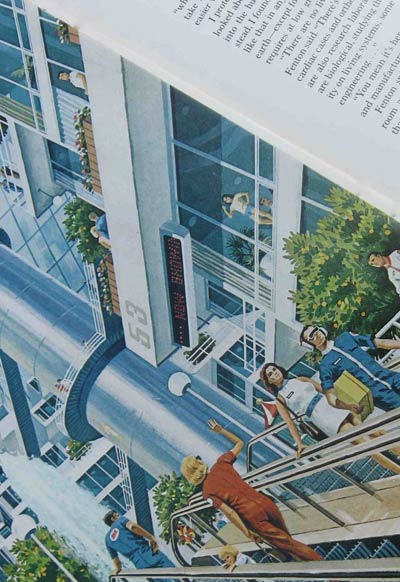
Asimov’s article, “The Next Frontier?” and illustrated by Pierre Mion, was written as a first-person account of a visit to an L-5 colony in the far-distant future of 2026. The account is mostly description: the National Geographic reporter is met by the colony’s director George Fenton, who shows him around and explains how everything works. Asimov experiences the gradual onset of simulated gravity as he travels from the arrival hub down a spoke to the colony’s rim. The colony is nearly 1,800 meters in diameter and houses 10,000 people.

Fenton shows him the farms and the industrial areas. He introduces the reporter to a rabbit meat hot dog and goat milk shake. He explains how the population is majority male, but they do have women, and families, and even a thousand children on the station. He shows the reporter a residential area and explains that the streets curve back and forth so that you cannot see them end and become disoriented. Fenton explains how the six segments of the torus are separated by airlocks in case of emergency. The colony is not completely self-contained but is working on it. They still import things from Earth, but most of their raw materials come from the Moon. And of course they recycle everything that they can; the reporter declines Fenton’s offer to tour the sewage plant.
That seemed possible in 1976. It still seems possible in 2011, but add a century at least before it comes to pass.
At its best, the space colonization vision was sophisticated daydreaming, not a future that a large number of Americans wanted to make happen. The vision had its shot and never caught on, despite appearing in the pages of a highly reputable magazine and gaining the attention of political decision makers. Gravity, weightlessness, radiation, and economics may all have ultimately made this vision untenable, but its biggest problem was that people didn’t like it.

We are living in the future that National Geographic’s experts speculated about. The cities are all right. World War III is no longer looming overhead. But grand visions of space colonization no longer appear in popular media. They no longer gain attention on news programs or in the halls of Congress. The Future, it was wonderful, but now it survives largely in the pages of faded magazines.


Until we lose a few million, or few thousand million, people from a dirty snowball, showing just how bad an idea it is to have all our eggs in one basket.

Of course some of us would dream the dream anyway, and do whatever we could to see our dreams become reality.

Tuesday, 7 June 2011

On Post Modernism

A Post-Modernist critique of itself:Why Has Critique Run out of Steam? From Matters of Fact to Matters of Concern by Bruno Latour
I myself have spent sometimes in the past trying to show the "lack of scientific certainty" inherent in the construction of facts. I too made it a "primary issue." But I did not exactly aim at fooling the public by obscuring the certainty of a closed argument–or did I? After all, I have been accused of just that sin. Still, I'd like to believe that, on the contrary, I intended to emancipate the public from a prematurely naturalized objectified fact. Was I foolishly mistaken? Have things changed so fast?
In which case the danger would no longer be coming from an excessive confidence in ideological arguments posturing as matters of fact–as we have learned to combat so efficiently in the past–but from an excessive distrust of good matters of fact disguised as bad ideological biases! While we spent years trying to detect the real prejudices hidden behind the appearance of objective statements, do we have now to reveal the real objective and incontrovertible facts hidden behind the illusion of prejudices?
Yes. Yes, we do.
And yet entire Ph.D programs are still running to make sure that good American kids are learning the hard way that facts are made up, that there is no such thing as natural, unmediated, unbiased access to truth, that we are always the prisoner of language, that we always speak from one standpoint, and so on, while dangerous extremists are using the very same argument of social construction to destroy hard-won evidence that could save our lives. Was I wrong to participate in the invention of this field known as science studies? Is it enough to say that we did not really mean what we meant?
Yes you were, and no it's not.

No, there's no such thing as "natural, unmediated, unbiased access to truth", but by trying hard enough, we can get arbitrarily close to it. Facts are, whether we like them or not, and just because our vision is imperfect doesn't mean to say that phantoms, illusions and deliberate fabrications are as equally real as imperfectly seen objects. No, the value of an idea does not depend entirely on how well it confirms your ideology, and the value of a fact is inversely proportionate: it's the exceptions, the inconvenient truths, that teach you the most.

Monday, 6 June 2011

BIID and the Body Map

From Neurophilosophy:
In BIID, or apotemnophilia, individuals express a strong desire to have a healthy limb amputated at a very specific location. People with this condition usually describe the affected limb as being "intrusive" or "over-present", and report that they have had the desire to remove since early childhood, but do not understand why. This desire can be so strong that sufferers sometimes resort to damaging the affecting limb irreparably, thus forcing doctors to amputate it. The vast majority of BIID sufferers have no other psychological disturbances, and almost always say that they feel much happier when the limb is eventually amputated.

A growing body of literature suggests that body awareness disorders such as BIID occur as a result of abnormal activity in the right parietal lobe, which is known to be essential for constructing a mental representation of the body. Specifically, this body image is constructed in the superior parietal lobule (SPL), which performs a function referred to as multisensory integration, whereby different types of sensory information entering the brain are brought together. Thus, information from the visual parts of the brain and the primary somatosensory cortex, which processes tactile sensations and proprioceptive information relating to the position of the body within space, is sent to the superior parietal lobule. There, it is combined with information from the motor cortex, which controls movement, and all is processed further to generate an internal model of the body. If these processes are perturbed, the body image is compromised.
...
In BIID, the situation is apparently reversed: the body image is missing a representation of the affected limb. But the body image distortion seen in BIID is almost certainly congenital. Children born with missing arms or legs sometimes experience phantom limb syndrome, suggesting that there is a representation of the limb in the brain, even though it has never existed. The body image is, therefore, probably "hard wired" during development. The experience of BIID sufferers is consistent with this, as they typically report that they have had the desire to have a limb amputated since early on in their lives. It seems the brains of apotemnophiles fail to generate a representation of the affected limb, because of some aberrant developmental mechanism. The limb has never been a component of the body image, so the afflicted person grows up believing that it feels "wrong", but cannot explain why.
I hypothesise that the difference between non-op and pre- or post-op transsexuals is caused by different degrees of masculinisation or feminisation of the superior parietal lobule.

The trouble is - I have no idea how to test this hypothesis. It fits with everything that we know, but that doesn't mean it's true.

All I can say is that when I was 4 years old, long before I had any concept of the differences between girls and boys, that what was "down there" felt... supernumary. Incorrect. Shouldn't be there. Furthermore, after genital reconstruction in 2006, things felt right. Not completely, there still seems something that should be there, in my abdomen, that isn't. But far, far closer to "natural" than before. Even things like urination are effortless, my instincts take over, whereas before I had to concentrate on what I was doing. I had to think, it was neither instinctive nor natural to have somewhat masculine anatomy, even if it didn't resemble the usual kind thereof.

That matches rather closely the description of BIID: but is normal for a woman, just as having a body image that involves external genitalia (and does not involve womb or cervix) is normal for a man.

I hope that one day, we'll be able to point to the areas of the brain that define gender identity more exactly, rather than "in the lymbic nucleus". That we will be able to do the same for sexual orientation, which is probably a very complex phenomenon, certainly involving sense of smell amongst other things, and be more exact than saying "it's in the hypothalamus and elsewhere". That we can do the same for male-vs-female toy preference, which has a strong correlation with sexual orientation amongst "effeminate" gay men and "butch" lesbian women; and finally, the body map in the superior parietal lobule. The latter appears to be more plastic than the others, but "more" here means "not very much".

Research on the latter might find palliative treatments for men who have been castrated, and women who have had vulvectomies, both of whom suffer the same kind of severe distress found in transsexuals. Distress that goes well beyond the problems caused by sexual incompetence. Reconstruction in conjunction with such treatment is the ideal course, but that may not be possible. The brain might need de-programming afterwards to remove the effects of the palliative treatment once reconstruction has been performed, or the patient gets BIID again.

More work needed. And as always, remembering that we're not dealing with machines here, but people, with feelings, emotions, human rights. I know that some researchers, at least, forget that. Maybe it's necessary not to get too involved in order to help people, but in some cases I think it's just pure lack of empathy towards those who are too different from themselves.

Friday, 3 June 2011

Diskworld Wiki

Time for an "interesting URL". This blog, while it deals with serious matters - even matters of life and death - can get a bit stodgy. We need to live, not just exist.

And so I present : the Main Page - Discworld & Pratchett Wiki

Thursday, 2 June 2011

UCSF Transgender Patient Care

From the University of California, San Francisco: Primary Care Protocol for Transgender Patient Care:
"Published transgender-specific level 1 evidence is essentially non-existent. [...] Long-term, prospective studies for most transgender-specific health issues are lacking, thus resulting in variable preventive care recommendations based primarily on expert opinion. However, by utilizing an increasing body of peer-reviewed, scientific research on transgender health, along with relevant data from the general population, one can develop an evidence-based approach to preventive care for patients who are transgendered or transsexual." -- Jamie Feldman, M.D. (Feldman, J [2007])
So it's not great, but it's the best we've got, and as good (or bad) as many other medical protocols.

Very good in the main, but the hormone dosage of Oestrodiol Valerate is too low by a factor of 2, and should be maintained even after gonadectomy. Otherwise, very good, even if lacking in detail regarding the different options for genital reconstruction procedures, and with nowhere near enough emphasis on checking for Intersex conditions first. An Intersex condition disqualifies a diagnosis of Transsexuality in the ICD-10, and is a significant clinical modifier in the (draft) DSM 5. Doctors should be prepared to deal with the consequences of involuntary genital surgery on Intersexed infants, and cannot rely on the patient to tell them of those. They may not know themselves.

Hmmm.. maybe I should write to them on this...

Wednesday, 1 June 2011

The Face of Evil

A follow-up from a previous post.

From the Grauniad:
The founder of a controversial school that treats severely autistic and emotionally disturbed children by shocking them into submission with the use of electrodes has been forced to quit the institution and serve five years' probation.
...
The criminal charges brought against Israel relate to an incident in August 2007 at one of the school's residential homes where students sleep at night. A call came in from someone posing as an authorised supervisor, who informed the carers on duty that two teenagers had misbehaved and should be given shock treatment.

At 2am, the boys were strapped on boards and given multiple shocks. One of the boys, aged 18, was shocked 77 times over a three-hour period and the other boy, aged 16, was shocked 29 times. It was later discovered that the initial call had been a hoax.

The Massachusetts attorney general, Martha Coakley, indicted Israel over allegations that he ordered his staff to destroy video evidence that revealed exactly what happened that night. Prosecutors had previously ordered that the video recordings from the home were preserved.
He knows what he's doing is wrong. He knew that what he did could have landed him in trouble - so like any evildoer, he tried to conceal the evidence.

Anyone who gave him the benefit of the doubt as being merely misguided must now admit that there's no doubt any more.
"I am now almost 78 years old, and it is time for me to move over and let others take the reins," he said in a resignation letter.

But his departure will not materially change the way the school operates, crucially its technique of disciplining children by meting out electric shocks as a form of supposedly therapeutic punishment. Of the school's 225 students, 97 are currently on the electric shock regime.

The terms of the plea deal struck between Israel and the prosecutors require the school to introduce additional monitoring to prevent a similar lapse of security happening again. But the shocks themselves can continue.
The Evil that men do lives after them....

Tuesday, 31 May 2011

Rights of the Parents; Rights of the Child

From a comment over at the Volokh Conspiracy, about the proposal in the county of Santa Monica to ban circumcision unless it's medically necessary:

rumpelstiltskin: Look up the statistics on botched circumcisions. You’re talking about something like between 2% and 10%, depending on what study you look at, with over a million circumcisions per year. Literally TENS OF THOUSANDS of cases of messed up circumcisions. You can’t possibly compare that to the future potential for a few hundred cases of penile cancer, many of which are also contingent upon lack of hygiene and STDs


leo marvin: Do we really want parents feeling like they need an opinion letter before they can risk exercising good faith judgment about their children’s best interest?


The issue of parental rights over their children as property is a fraught one. The assumption has been that unless otherwise proven to the contrary, the parental judgement about what is right for the child should prevail.

The question is about “unless otherwise proven”.

Examples:

  • The removal of legs from children so they will have successful careers as beggars, a common practice in much of the 3rd world. It is for the good of the child.
  • The binding of the feet of little girls, breaking the bones so they will have “lilly feet”, more attractive to men, and so they will not be different from their peers.
  • FGM of course, ranging from a cosmetic nick to the clitoral hood, to complete removal of the external genitalia.
  • Circumcision.
  • Castration of boys so they will not be tempted into the sin of Onanism, and so imperill their immortal souls.
  • Sex-reassignment of Intersexed children, often sterilising them and leaving them with insensate genitalia, but at least it looks normal so they won’t be bullied at school and won’t be rejected by their parents.


All “for their own good”. All actually practiced in many parts of the world, some of them not just common, but nigh universal in the USA.

I’m currently involved in a Legal Reform effort in the Australian Capital Territory. Current thinking is that parental rights to alter their child’s body are conferred only by objective medical neccessity. If it does harm, it’s not permitted.

This puts us on a collision course with the religious beliefs of a significant fraction of the community. It may be that in a purely practical “harm reduction” model, that fewer problems would be caused by de-criminalising un-neccessary circumcision, in order to reduce complications from backyard, covert procedures. That should really be the test. The medical evidence against circumcision is overwhelming: it’s the complication rate that’s the problem, it’s many orders of magnitude worse than even the most optimistic claims for circumcision’s efficacy at preventing disease, a claim that is very debateable but I think has to be accepted given the deeply-held beliefs of many.

Ritual clitoral hood nicking may also have to be permitted, if we’re not to have backyard infibulations with broken glass.

“Normalisation” surgery on Intersexed children, which is often (1/3 of the time for most conditions) the “wrong way”, usually lumbering little boys with female bodies, should be forbidden. Only genital reconstruction to provide urinary and fecal continence, to reduce pain, or to remove an immediate (not long-term post-pubescent) cancer risk or similar medical neccessity is allowable.

The opposite side of the coin is that when the child is Gillick-competent, or reaches the age of consent, or is otherwise judged to be competent enough to make decisions (younger if supported by medical experts and parents), then they should be allowed such surgery.

I hope that it would be possible for circumcision in the Jewish Faith to be part of the leadup to Bar Mitzvah — a procedure performed (or not performed) with the boy’s informed consent between the ages of 12 and 13. A compromise between medical facts and religious belief.

I really hate arrogantly riding roughshod over others beliefs. But the ones that are most important are the children, and the record of parents when it comes to genital modification of their children is quite frankly bloody appalling.

Monday, 30 May 2011

Begging the Question: Autism in Trans Men

From Medical News Today, an article based on research by a notorious transphobe,
Professor Baron-Cohen.

Whether he's transphobic or not I can't say, but he certainly has that reputation.

 UPDATE: From a comment below:
"I should state firmly that Prof Simon Barron-Cohen is not transphobic. We worked very well together and at no point did he show any signs of transphobia ... quite the reverse."


Nonetheless, facts are facts, regardless of who discovers them, and whether we want them to be true or not.
The researchers measured autistic traits using the Autism Spectrum Quotient (AQ) and compared AQ scores from transmen; transwomen (male-to-female); typical males; typical females; and individuals with Asperger Syndrome (AS, a form of autism). They found transmen had a higher average AQ than typical females, typical males and transwomen, but lower than individuals with AS. The findings are published today in the Journal of Autism and Developmental Disorders.

Professor Baron-Cohen, Director of the Autism Research Centre, interpreted the results:
"Girls with a higher than average number of autistic traits tend to have male-typical interests, showing a preference for systems over emotions. They prefer not to socialise with typical girls because they have different interests, and because typical girls on average have more advanced social skills. Both of these factors may lead girls with a higher number of autistic traits to socialize with boys, to believe they have a boy's mind in a girl's body, and to attribute their unhappiness to being a girl."


Rebecca Jones, who led the study with Professor Baron-Cohen, added:

"If such girls do believe they have a boy's mind in a girl's body, their higher than average number of autistic traits may also mean they hold their beliefs very strongly, and pursue them to the logical conclusion: opting for sex reassignment surgery in adulthood."
The problem here is that they assume trans boys are girls. Let's re-write that with the opposite assumption made, one at least as likely (I think more so, but let's say "equally" for the sake of argument).
"If such boys do believe they have a boy's mind in a girl's body, their higher than average number of autistic traits may also mean they hold their beliefs very strongly, and pursue them to the logical conclusion: opting for sex reassignment surgery in adulthood."
Well yes. Obviously. Not controversial. The only "pathology" here is caused by begging the question, and the circular argument that because they're girls, they must be disordered for thinking they're boys, thereby proving they're really girls who only think they're boys.

Let's look at Prof Barron-Cohen's statement in the same light:
"Boys with a higher than average number of autistic traits tend to have male-typical interests, showing a preference for systems over emotions. They prefer not to socialise with typical girls because they have different interests, and because typical girls on average have more advanced social skills. Both of these factors may lead boys with a higher number of autistic traits to socialize with boys, to believe they have a boy's mind in a girl's body, and to attribute their unhappiness to having a girl-shaped body."
Well yes, once more. See how this becomes almost tautological once the unspoken assumption is removed?

Interesting though that he found no increase in Autism-Spectrum Quotient in Trans women. That's not been in accordance with my observation of several hundred of them. Less than in Aspergic males yes, but rather more than in neurotypical females. Still, the data there's pretty clear.


So let's look at the actual article...Brief Report: Female-To-Male Transsexual People and Autistic Traits by R.Jones et al, Online First™, 30 March 2011
The ‘extreme male brain’ theory suggests females with Autism Spectrum Conditions are hyper-masculinized in certain aspects of behavior. We predicted that females with Gender Identity Disorder (who are masculinized) would have elevated Autism Spectrum Quotient (AQ) scores. AQ scores from five groups were compared: (1) n = 61 transmen (female-to-male transsexual people); (2) n = 198 transwomen (male-to-female transsexual people); (3) n = 76 typical males; (4) n = 98 typical females; and (5) n = 125 individuals with Asperger Syndrome (AS). Transmen had a higher mean AQ than typical females, typical males and transwomen, but lower than individuals with AS. Transmen have more autistic traits and may have had difficulty socializing with female peers and thus found it easier to identify with male peer groups.
The rest is behind a pay-per-view wall, but here's what it says in part:
Given that in all the studies of ASC cited above, females with ASC are hyper-masculinized in specific aspects of behaviour and cognition, it may well be that they identify more readily with the other sex. A recent study of play by girls with ASC found they show masculinization in choosing toys that do not require pretend play (Knickmeyer et al. 2008), and women with ASC report higher rates of tomboyism in childhood (Ingudomnukul et al. 2007). Females with ASC may therefore feel that they don’t belong in a typical female peer group and in a minority of cases it may even lead to develop Gender Identity Disorder (GID). An elevated number of autistic traits would confer a rigidity on their perceived gender identity, similar to that which is observed in individuals with persistent GID from childhood to adulthood (Di Ceglie 1998).
Er... hold on...

That means I shouldn't exist. Neither should Prof Lynn Conway, nor Diane Schroer, nor Stephanie Lanfhoff, nor Amanda Simpson, nor any of the high-AQ Trans women of the world. The same traits that make Trans men, men, should prevent Trans women with those traits from existing. And half or more of the female engineers of the world, the non-trans variety, with high AQ should actually think they're male.

They don't. To state the obvious.

And that means the "hyper-masculine" theory of autism has a few holes in.

Observations by Blanchard et al have shown that late-onset Trans women, those who could live with their situation past their mid-20's without actually dying without treatment, tend to go into engineering, science, and computer science. So do early-onset Trans women, but there the correlation, while strong, is far weaker.

An alternate explanation is that the same hormonal glitch in the womb that causes Transsexuality, also tends to cause atypical neurological development in other areas too. While Trans men and Trans women aren't mirror-images of each other - there's certain differences in hearing for example, they're close when it comes to ambidexterity and many brain structures. Things that would appear normal in men are just normal in trans men too - and to some degree in trans women whose conditions are not as severe as early-onset cases.

Note also that it's high-AQ, not full-blown autism. There may be different causes, two or more syndromes with superficially similar effects, but with significant differences. I think they confuse correlation for causation: that we have two manifestations of the same underlying cause, hormonal anomalies in the womb that cause cross-sexed neuro-anatomy.

One area where they may grasp a part of the truth: that of two people, both with female bodies and somewhat male minds, the one with the higher AQ may identify as male earlier, rather than later. Just as with two people, both with male bodies and somewhat female minds, the one with the higher AQ may identify as female later, rather than earlier.

Sunday, 29 May 2011

I've given up on saying anything's Impossible

Not when it comes to biology, and the science of sex and gender. All I can say is that some things are exceedingly unlikely - but probably inevitable, sooner or later.

Case in point (and thanks to OII science advisor M.Italiano for this one)

A case of combined hermaphroditism and autofertilisation in a domestic rabbit. Frankenhuis et al., Vet Rec. 1990 Jun 16;126(24):598-9
A true hermaphrodite rabbit served several females and sired more than 250 young of both sexes. In the next breeding season the rabbit, which was housed in isolation, became pregnant and delivered seven healthy young of both sexes. It was kept in isolation and when autopsied was again pregnant and demonstrated two functional ovaries and two infertile testes. A chromosome preparation revealed a diploid number of autosomes and two sex chromosomes of uncertain configuration.
The case of Petra Henderson has similarities, but as she lacked all the right equipment after falling pregnant due to botched hernia surgery causing auto-fertilisation, the foetus was re-absorbed.
Instead she was quickly asked to work on various defence products for and with "certain UK employers" including Marconi Space and Defence Systems Ltd., on specialised defence developments and systems from undersea to satellite systems.
She's a friend of mine, though I haven't contacted her recently. And yes, GEC-Marconi was a former employer of mine too, I still have one of their drink mugs.

Of course, I've also worked on "specialised defence developments and systems from undersea to satellite systems". An improbability factor of 8,767,128:1 against.

Friday, 27 May 2011

Ugly Secrets of 2nd Wave Feminism

The spoken word has more impact than turgid prose. Please listen to this J'Accuse! video.


Yes, that is what was said and written. That is what is in textbooks today. That is what is still being taught in some places, including the Australian National University, in courses on Feminism.

The antidote to such hatred is not suppression - it's exposure.

Thursday, 26 May 2011

Dangerous Knowledge

From NBC Bay Area:
Redwood Heights Elementary School, in Oakland, is in the hot-seat after the school decided to educate students about gender diversity.

On Monday and Tuesday, students of every grade were taught what the school called age-appropriate lessons about gender differences. Some lessons included all-girl geckos, a transgender clownfish, and boy snakes who act "girly" reports the San Francisco Chronicle.

"That's a lot of variation in nature," Gender Spectrum trainer, Joel Baum, told the students. "Evolution comes up with some pretty funny ways for animals to reproduce."

Principal Sara Stone said the lesson on gender differences was part of a larger effort to control bullying in the school, something parents supported last year.

However, after the lessons began, several parents felt discussion in the classroom was too much.

The Pacific Justice Institute, a conservative organization, said teaching children that there may be more than two genders, "does not represent the values of the majority of families in Oakland,"
Facts that contradict established Ideology must be hidden. Knowledge must be suppressed. It's vital that bullying be allowed to continue. Enforced Ignorance is a neccessity.

Children must not be allowed to know that some fish change sex. They certainly mustn't be allowed to learn that some humans do too.

From the comments:

John Juhasz · Top Commenter
your whole rant makes about as much sense as the Christmas light sets that say "for indoor or outdoor use only", y'know, warning us against that "third" option.

you want to define ALL of society, and force an agenda down the throats of 100% of students, over a very specific condition that is only present in far less than `1% of the total population.

If clownfish are such a stellar example of how humans should behave, do you advocate children mimicking the clownfish and staying underwater for long periods of time ? No ? Then maybe you have the wrong perspective.
My Reply:
John Juhasz - it's not about "behaviour", it's about biology. I'm not advocating that everyone should "behave" like clownfish any more than I'm advocating that everyone should "choose" to be born with white skin.

I happen to fit in the gender binary quite neatly. Female, knew I was as a child. But I'm too good a scientist not to recognise that obvious fact that not everyone is like me.

The Pacific Justice Institute wants to suppress facts in order to shore up their cultural beliefs; much as equivalent elements in Saudi Arabia want to suppress the teaching of astronomy, as it contradicts their cultural belief that the sun rotates around a fixed Earth. The Facts get in the way, so children must not be allowed to be exposed to them.


mymonkeydreams

No one is talking about freaks of nature in any event it is natural to have mutations but not normal.

My Reply:
mymonkeydreams - actually, yes we are talking about "freaks of nature" as you call them. Those born with the mutation that causes blue eyes. Or the one that causes red hair. Or the ability to digest milk (after infancy). All those 3 mutations are very, very rare in people who don't have european ancestry, they are not "normal" for most of humanity. All are far rarer mutations in most places than those which cause a natural change of sex.

Which I did, in 2005, due to 3-beta-hydroxysteroid-dehydrogenase deficiency syndrome.

Yes, we exist, we walk amongst you, far more of us than you imagine. Many thousands in the USA. We've tended not to reveal our history in the past - why should we? - but with the twin growth of more strict ID regulations, and growing ignorance in the Fundamentalist community, that's no longer an option.

As this story shows, many people object to us. Not what we do, they object to our existence, which contradicts their beliefs. Here's a quote: "The very powerful and the very stupid have one thing in common. Instead of altering their views to fit the facts, they alter the facts to fit their views...which can be very uncomfortable if you happen to be one of the facts that needs altering."

The Pacific Justice Institute is a perfect example. Our existence violates their religious freedom to believe things that are not true.
Further research on the MC1R gene has shown it to be more common than I'd thought. See Evidence for Variable Selective Pressures at MC1R by Harding et al Am J Hum Genet. 2000 April; 66(4): 1351–1361.
Variation in human skin and hair color is largely explained by the levels and ratio of the two major forms of melanin—eumelanin, which is brown-black, and pheomelanin, which is red-yellow (Quevedo and Holstein 1998). The type of melanin produced is under the control of two genes, identified initially by the mouse mutations extension and non-agouti. These correspond to the melanocortin 1 receptor (MC1R [MIM 155555]), a G protein–coupled seven-pass transmembrane receptor, expressed on cutaneous melanocytes, and an antagonist ligand, agouti (Robbins et al. 1993; Jordan and Jackson 1998; Ollmann and Barsh 1999). The MC1R gene (chromosome 16q24.3) is the only gene identified, thus far, that explains substantial phenotypic variance in human pigmentation (Rees and Flanagan 1999).
There's remarkably little hard data on the number of redheads in the world - much as there is for those who are Intersexed. The latter certainly outnumber the former though, possibly by an order of magnitude. The number who have genes that can have the potential to cause a "sex change" is probably less. More than the number of redheads who can drink milkshakes with no ill-effects though.

Wednesday, 25 May 2011

Human Population Growth and Evolution

From Daily Galaxy: Hyper Evolution -- Human Population Growth is Accelerating Species Change
In a fascinating discovery that counters a common theory that human evolution has slowed to a crawl or even stopped in modern humans, a study examining data from an international genomics project describes the past 40,000 years as a time of supercharged evolutionary change, driven by exponential population growth and cultural shifts.
...
A team led by University of Wisconsin-Madison anthropologist John Hawks estimated that positive selection just in the past 5,000 years alone -- dating back to the Stone Age -- has occurred at a rate roughly 100 times higher than any other period of human evolution. Many of the new genetic adjustments are occurring around changes in the human diet brought on by the advent of agriculture, and resistance to epidemic diseases that became major killers after the growth of human civilizations.
...
The human population has grown from a few million people 10,000 years ago to about 200 million people at A.D. 0, to 600 million people in the year 1700, to more than 6.5 billion today. Prior to these times, the population was so small for so long that positive selection occurred at a glacial pace, Hawks says.

"What's really amazing about humans," Hawks continued, "that is not true with most other species, is that for a long time we were just a little ape species in one corner of Africa, and weren't genetically sampling anything like the potential we have now."

"Five thousand years is such a small sliver of time -- it's 100 to 200 generations ago. That's how long it's been since some of these genes originated, and today they are in 30 or 40 percent of people because they've had such an advantage. It's like 'invasion of the body snatchers.'"
What drives the pace of evolution? Strong, and relatively rapidly changing environmental factors that will heavily benefit one genetic group over another. Speciation is driven by having isolated groups, but evolutionary change within a species is driven by having a large population size, with good communications to propagate advantageous mutations to a large part of the population.

Even non-beneficial mutations can propagate rapidly under those conditions, as long as they confer no disadvantage: Consider, 12,000 years ago, no-one had blue eyes - and apart from a few in one corner of the world, no-one could digest raw milk after childhood.

Of course, change isn't always advancement.

Tuesday, 24 May 2011

Collect the Set!

A fun game for all the family. See how many entirely independant, grass-roots organisations all run the same scare-campaign clip. Sometimes to show how Gays are a danger to children, sometimes against human rights for Trans or Intersexed people.

All entirely independant of course, no connection whatsoever between the Tennessee Family Values Coalition, Citizens for Good Public Policy, Kalamazoo Citizens voting NO for Special Rights Discrimination, Maryland Citizens for a Responsible Government... it's just a coincidence.


Then there's this one:


Gainesville police are looking for a man who rode a purple bike to the Home Depot store in mid-February, followed a woman into the restroom and then tried to photograph her by holding a cell phone camera underneath a stall divider.
...
McCollum said that when the woman saw a hand holding the cell phone in a way that allowed it to be used to take pictures, she screamed and the man ran out. An employee saw the man fleeing and provided additional details about him.

The white man was about 5-foot-9, 140 to 150 pounds and had a thin build. He had thick, dark, collar-length hair and a well-trimmed goatee. His right arm was almost completely covered in tattoos. His left arm had fewer tattoos, but one that stood out – a black rectangle on the back of his left forearm.

The man was wearing a black, sleeveless T-shirt, dark baseball-style cap, cargo pants and white tennis shoes.
Source.

Not exactly the description of a trans woman, or someone pretending to be a trans woman, is it? The logical connection with the legislation a bit tenuous, maybe?

Maybe it was the fact that one of their supporters who owned a store was found to have left a phone camera in the ladies changing rooms - and saved the consequent videos for later perusal - that meant this got little air time.

Or that the perp, Timothy Malone, was caught a month later.

Monday, 23 May 2011

Gender Diversity in the ACT

From the recent report in PDF format, Gender Diversity in the ACT(Australian Capital Territory)
Summary
Despite the limitations of the study acknowledged below, this research paints a clear picture of a community struggling with a number of key issues:
  • access to informed, respectfully delivered medical and psychological services
  • inadequate access to appropriate identity documentation and protection from discrimination
  • lack of social connection with family and the broader community
  • over-representation in low income categories despite above average levels of education.
A first step towards addressing these important issues is to prioritise discussion of the hurdles facing SDG (sex and gender diverse) individuals. This conversation, aimed at ‘speaking into existence’ the lived experiences of this largely marginalised community, must occur at every level – from informal social gatherings to local, national and international political and human rights forums.
It should not be a question of whether the needs of this section of the population are ‘significant’ enough to warrant human rights reform, legislative change and adequate medical and psychological support. It should be a question of how we, as a forward-moving nation, can prioritise and implement such reform.
...
Employment
The sample in this survey indicates unemployment levels within the trans community that are more than six times higher than those experienced by the general ACT population.

Education
It is interesting to note the substantially higher educational qualifications of respondents compared to the general population. This is a trend that has been identified in other studies.

Income
It is interesting to note the distribution of income amongst the trans population as compared to the general ACT population, with the SGD population being skewed to either end of the range. It is possible that the absence of trans respondents in the middle income brackets is a direct result of employment-related discrimination, making it very difficult for trans people to access or remain in employment. This would explain the large proportion of respondents in the lower income bracket.
The same kinds of figures have been reported in the USA and UK.

This survey though also looks at another issue:
Relationship status and living arrangements
The survey indicates that compared to the general ACT population, trans people are only half as likely to be in an intimate relationship, and more than twice as likely to live alone.
It seems possible that this is the result of high levels of stigma and discrimination within the community.
For the general population, the majority of social interaction is with a partner, housemates and work colleagues. The survey shows that SGD people are significantly less likely to have social interactions with any of these people. This would indicate that it is likely that SGD people are socially excluded from the bulk of the social interactions that the general population engage in.
Just a bit, yes. Though not in my experience - I'm so introverted I have many of the symptoms of social anxiety disorder, and avoidant personality disorder, only without the actual anxiety. The exclusion is entirely of my own making, and is far less now than it was before transition.

OK, yes, I addressed a political gathering recently, have appeared on national TV on Intersex issues... what you don't realise is that I learnt long ago to compensate. I find it no more uncomfortable to do that than to go to a movie - something I also do once or twice a decade, just to be sociable. Less if I can avoid it.

That might give you an idea of the scope of the problems. They will drive even someone like me to become an Activist.

Friday, 20 May 2011

Sex Chromosome Variation in Denmark

A 20 year old study - but still good science.
Sex Chromosome Abnormalities Found Among 34,910 Newborn Children: Results From a 13-Year Incidence Study in Ã…rhus, Denmark J.Nielsen and M.Wohlert in Birth Defects: Original Article Series, Volume 26, Number 4, pages 209-223
Chromosome examination was made of 88% (34,910) of all 39,618 live- born children at the Maternity Hospital in Ã…rhus during a 13-year period from 1969 to 1974 (4 years, 5 months) and from 1980 to 1988 (8 years, 7 months).

This paper deals only with the sex chromosome abnormalities. Autosomal abnormalities will be presented elsewhere.

Klinefelter syndrome was found in 1 per 596 boys, XYY in 1 per 894 boys, triple X in 1 per 1002 girls, and Turner syndrome in 1 per 2130 girls. Other sex chromosome aberrations were found in 1 per 11,637 children. The total incidence of sex chromosome abnormalities was 1 per 448 children or 2.23 per 1000.

KaryotypeNumber
47,XXY20
46,XY/47,XXY7
46,XX(male)2
48,XXYY1
47,XYY18
46,XY/47,XYY2
47,XXX17
45,X1
45,X/46,XX2
45,X/47,XXX1
45,X/46,X,r(X)1
45,X/46,X,inv(X)**1
45,X/46,X,i(Xq)/47,X,i(Xq),i(Xq)1
45,X,inv(9)/46,XX,inv(9)1
45,X/46,XY (male)1
46,XX/ 47,XX,del(Yq) (female)1
46,XX/46,XY (female)1
Total78
What was that about "boys are 46Xy, girls 46XX, and the others only one in a million" again?

Of course most Intersexed children don't have such obvious chromosomal variation from the norm. 1 in 500 girls have Congenital Adrenal Hyperplasia(CAH). Then there's those with Persistant Mulleriam Duct Syndrome(PMDS), Complete Androgen Insensitivity Syndrome(CAIS), Partial Androgen Insensitivity Syndrome of various degrees (PAIS), 5-alpha-reductase-2 deficiency syndrome (5ARD), 17-beta-hydroxysteroid-dehydrognase-3 deficiency syndrome (17BHDD), 3-beta-hydroxysteroid-dehydrognase-3 deficiency syndrome (3BHDD) which can also cause CAH, Vaginal Dysgenesis, Gonadal Dysgenesis, and so on and so on, from minor mutations, environmental causes, or timing glitches.

None of those are counted in the above.

Thursday, 19 May 2011

Living with a Choice others made for you

Living (with involuntary surgical alteration of your sex) in Germany

On last week's program, we met Anna and her intersex daughter - a child born with both female and male sexual characteristics. This week Living in Germany investigates how, once they have grown up, intersex adults have to come to terms with the choices doctors made for them when they were infants.
Select
Audios and videos on the topic
"Listen to Living in Germany"
to play.

Enough already.

Wednesday, 18 May 2011

Sexual Orientation and the Brain

I'm far more interested in Gender Identity than Sexual Orientation. But I really have to look at the latter too, even though I have an irrational aversion to doing so. Anyway, here's a professional presentation on the subject. Enjoy.

Sexual Dimorphism of the Brain & How it Applies To Gays & Lesbians

Tuesday, 17 May 2011

The Evolution of Altruism

From Scientific American, a story that has some bearing on my PhD work, in a peripheral way.
Each test consisted of 500 generations of eight robots. To mimic what might happen in nature, the successful robots from each generation were "randomly assorted and subjected to crossovers and mutations…forming the next generation," the researchers explained. And although the 33 "genes" were randomly distributed at first, "the robots' performance rapidly increased over the 500 generations of selection," the researchers noted. And along with acuity at collecting the food, "the level of altruism also rapidly changed over generations," with those robots around more closely "related" individuals becoming the most altruistic.

Aside from demonstrating Hamilton's rule in a quantifiable—if artificial—system, the work also shows that "kin selection does not require specific genes devoted to encode altruism or sophisticated cognitive abilities, as the neuronal network of our robots comprised only 33 neurons," the researchers noted in their paper.
Not only is altruism am inevitable consequence of evolution, we can even quantify it using very simple genetic and evolutionary systems.


We have two parameters - population size (8) and number of generations till termination (500). I'd be interested to see the mutation rate, crossover rate, and parental selection mechanisms though, to determine whether it is a truly genetic or a degenerate evolutionary algorithm at the end.

And I'd be really interested in using a meta-genetic algorithm to optimise those parameters.

Monday, 16 May 2011

Transphobia: Not just for Straight People

From StandingWatch.Net, a short History of Gay and Lesbian Transphobia:
In spite of early transgender support and avid activism, GAA dropped transgender protections from the first omnibus anti-discrimination bill introduced to the New York City Council. Transgender issues were seen as “too extreme,” though the bill would fail anyway.

In 1971, gay men would adopt an assimilationist heteronormative position that excluded transgender persons. In 1973, lesbian groups would become radicalized, prefering separatism and an extreme brand of feminism that similarly excluded transgender individuals. It would be a very long time before transgender issues were taken seriously by gays and lesbians.

In early 1970’s, Beth Elliott was active in a number of organizations including the Alice B. Toklas Gay Democratic Club, which she co-founded, the Board of Directors of the California Committee for Sexual Law Reform working to repeal California’s anti-sodomy laws, and the Daughters of Bilitis. The Daughters of Bilitus had been a pioneering lesbian organization during the 1950s and ‘60s, but was losing membership in the ‘70s as the lesbian community turned to more radical organizing.

In ‘73 Elliott was asked to stand for election as the Vice-President of the San Francisco chapter of the Daughters of Bilitis. Late in her term of office, her transgender status became a point of contention at the West Coast Lesbian Conference, where she was outed and vilified for being a MTF transsexual. In the weeks and months to follow she was further vilified and even betrayed by women who had once called her friend. The treatment she received led her to become “stealth” for many years after.

In July of 1973, during a “Gay is Good” rally, Sylvia Rivera was followed on the stage by lesbian separatist Jean O’Leary. She denounced transgender people as men who, by “impersonating women”, were exploiting women for profit. It was the beginning of a series of such high profile transphobic attacks from the lesbian community.

In 1977, at the height of the Right Wing / Anita Bryant anti-gay rights backlash, the lesbian feminist separatist movement was busy attacking an even smaller community that only wanted to work within the lesbian community, lesbian identified transsexual women. Central to the conflict in ‘77 was transsexual recording engineer, Sandy Stone, working at Olivia Records. When word got around that Olivia had a transsexual in the company, lesbian separatists threatened a boycott of Olivia products and concerts. Olivia Records was on the edge of profitability. Olivia supported Stone at first but eventually crumpled beneath the separatists demands, asking for Sandy’s resignation....
And much, much more. Janice Raymond, a Professor of Ethics of all things, had an influence that was more than baneful: it was deadly.
In the early 1980′s, the US Government commissioned a study regarding the topic of federal aid for transgender persons seeking health and rehabilitative services. Raymond’s part in that study, and in particular her report, resulted in the elimination of all federal and most state aid in any form for anything remotely related to transgender issues. That same study is also the basis for denial of health care services and coverage by nearly all private health insurance carriers. The numbers who have died as a result is purely speculation, of course. But, it is not uncommon for transgender persons to be denied care (and subsequently die from) cancers of the reproductive system, if they are living in the gender they identify as.
We're starting to undo some of the damage from this particular brand of Radical Leftist Lesbian Feminism now. I wonder how many Fundamentalist Right-Wing Fanatics realise that the causes they hold so dear were originally those of the radical Left? It's so difficult telling the two apart at times...

Friday, 13 May 2011

Blackberries and Viruses

Neither Blackberries nor Viruses have anything to do with computers in this context though.

From Daily Galaxy, another example of how natural substances self-organise under random perturbations.
Researchers at Lehigh University have discovered high-level molecular self-recognition in dilute aqueous solutions, a level of “intelligence” previously considered achievable only by biological molecules. The researchers studied the structures of the two macroion clusters and discovered that in mixed dilute aqueous solutions, the clusters self-assemble into distinct blackberry structures (and do not form mixed species).
...
Despite being water-soluble and carrying the same type of charge, macroions tend to attract each other with surprising strength and to form very stable, uniform, single-layered hollow spheres known as “blackberry structures.” The structures are common when ions become large, and mimic some biological processes, such as shell formation in the capsid virus.


Life, don't talk to me about Life... except I will. The more evidence we have of how the Universe works, the more Life seems an inevitable outcome. Not just possible, not just probable, but inevitable. Self-organisation is a property of more molecules than we thought.