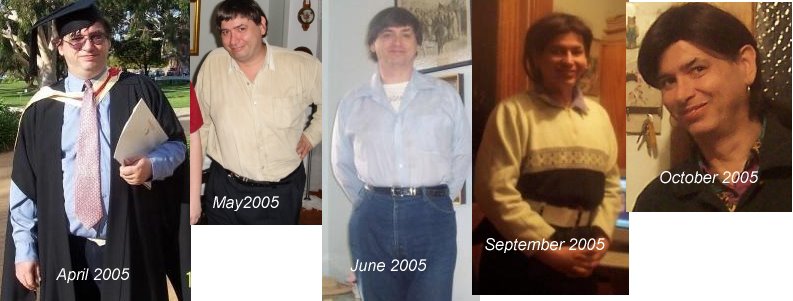
As the David Bowie song goes:
Time may change me
But I can't trace time
Time may change me
But I can't trace time
It's not an intefada. I'm an Australian SF author temporarily living in Paris; sadly I don't have my own blog (yet), but I'm writing a freelance article on liberte-cherie, the French libertarian organisation (www.liberte-cherie.com). I'm no expert, but I'm learning some things.From another, at the Roger L Simon :
The problem in France is not the same as in the UK or the Netherlands. There, there's been an overdose of PC multi culturalism... but American critics are wrong to assign that to France. France HAS insisted on integration, as seen by the controversial ban on headscarves in French schools. And most French muslims do consider themselves French, to varying degrees, and Islamic extremism is pretty small thing here (there was far more protest against the headscarf ban outside of France than inside). So it's not an intefada.
There's just no damn jobs. White college grads can't get jobs, what hope do immigrants from regions with bad schools have? I think this is more like the LA Rodney King riots -- there's people there who want the French dream, just as in LA people wanted the American dream, but they just don't see it when they look around, and they resent the fact enormously. They can't change schools to get a better education because the government says you have to go to the school where you live, and they live where they do because of the zoning laws... which I'm no expert about, but I do know that the government owns 30 percent of all housing in France, and poor immigrants basically live where they're told. The government tries to give them everything and does it extremely badly, there's no upward mobility, and it doesn't breed a happy community. Religion exacerbates the feeling of exclusion, I'm sure, but the rioting seems mostly driven by economics and bad social policy.
So yeah, it's a stupid French government problem, but not the one some American critics are ascribing... however attractive it might be to do so.
The government has quietly put a lot of AK-47-toting soldiers on patrol in Paris, especially around key public transportation points and at the monuments and high-traffic areas such as Forum des Halles. I think there are three reasons for this - 1) to reassure the public - and the tourists, 2) to take some pressure off the Police Nationale, who have been deployed in greater numbers to the north-eastern suburbs and 3) to send a message to would be trouble-makers.Mark Steyn's View :
HH: And so, you're not going to Paris anytime soon?From the Ace of Spades :
MS: I'm actually thinking of going to Paris. I went to one of these suburbs that's currently ablaze three years ago. And what was interesting to me is I had to bribe a taxi driver a considerable amount of money just to take me out there. They're miserable places. But what was interesting to me is that after that, I then flew on to the Middle East, and I was in Yemen, and a couple of other places. And what was interesting to me was that I found more menace in the suburbs of Paris than I did in some pretty scary places in the Middle East. I mean, there is a real...this, I think, is the start of a long Eurabian civil war we're witnessing here.
HH: Now that's a pretty provocative statement. Let's begin by...describe these for us. Are they like the Moscow or the Leningrad or the St. Petersberg tenements that stretch on and on?
MS: Well, actually, I would say they're more miserable than that...
HH: Wow.
MS: ...because a lot of them are like concrete bunkers. They have very strange things there...these public buildings that you have to have a kind of security card to get into. So, you'll be going to see someone, and you'll be frantically sticking this kind of key card in the door, while you're standing outside on this very exposed sidewalk. They're places where people who are not Muslim feel very ill at ease. They're places where the writ of the French state does not run. The police don't police there. They basically figure if you go there, you're on your own. You're taking your own chances there. I mean, I don't think Americans understand quite the degree of alienation of some of these groups.
...
HH: ...what option do they have if these riots continue, though? They can't appease people who won't be appeased.
MS: No, they can't. And essentially, you're dealing with communities that are totally isolated from the mainstream of French life. Where all kinds of practices that wouldn't be tolerated, that are not officially tolerated by French law, such as polygamy, for example. Polygamy is openly practiced in these...in les Bonlier, as they call these suburbs, these Muslim quarters of Paris. I mean, we're talking about five miles from the Elysee Palace. Five miles from where Jacques Chirac sits. And you finally got...you know, we kept hearing all this stuff ever since September 11th, you know, the Muslim street is going to explode in anger. Well, it finally did, and it was in Paris, not in the Middle East.
The problem here isn't religious per se. It's political, or the political aspects of the religion. There are certain politically-oriented commands in the Muslim religion -- take territory to expand the Muslim world, do not submit to any authority except a Muslim one, etc. -- that are going to make it very hard for any state to accomodate a rising population of often-poor and unemployed young Muslim men whose sense of self-worth comes chiefly from a radical, violent vision of Mohammad the Conqueror.From the ABC :
The usual caveat: Of course not all Muslims are like this, or believe in rioting for purposes of expressing cultural solidarity and superiority, or to effectively conquer a territory through lawlessness and mayhem. But a distressing number do, and it's getting harder and harder to finesse the problem away with happytalk and pointless meetings with "Muslim leaders."
Fresh rioting has broken out on the outskirts of Paris overnight as gangs of youths challenged authorities' vows to crack down on urban violence that has plagued the French capital for over a week.From The Belmont Club :
...
Shots were also fired at riot police vans without causing injury.
A top government official for the region, Jean-Francois Cordet, said the violence was "spreading to the east and north" of Seine-Saint-Denis with only a few areas with a heavy police presence remaining "relatively calm".
Five officers were hurt by projectiles thrown by youths in the western suburb of Mantes-La-Jolie.
And for the first time since the troubles first erupted on Thursday of last week, there were sporadic signs of copycat rampages elsewhere in France. Police said several cars in the eastern city of Dijon were set alight.
...
The clashes have gained territory virtually every night since they began, exposing what sociologists and commentators said was a blatant failure of successive governments to address the problems of low-income, high-immigration suburbs dominated by grim public housing estates, some of them little more than ghettos where crime and gangs run rampant.
The riots were sparked last week by the accidental electrocution of two teenagers who had hidden in an electrical sub-station to escape a police identity check in the suburb at the epicentre of the troubles, Clichy-sous-Bois.
The opposition Socialist Party and many in the suburbs themselves blamed hardline policies by Interior Minister Nicolas Sarkozy for fanning the violence.
The Muslim uprising of the last week is a challenge to the half century of policy that has brought France to this point. Polices which deprecated European culture, frowned on a national identity, lowered the birthrate, created a welfare state, imported 'guest workers', promoted mindless multiculturalism and relied on 'international' treaties for protection -- all articles of Leftist faith -- are now facing the judgment of history; and worse, the verdict of Islam. It would be supremely ironical if the European Left, the 'vanguard of history', required for its future survival the very things it had set out to destroy.From Non Passaran :
...
One thing that has gotten French authorities jumpy is a report that Islamists have smuggled two MANPAD surface to air missiles into Europe. However, another French newspaper says there is nothing to worry about, as one if its sources assure them that the missiles were intended for 'non-European' targets.
The night's activity: 400 cars and 27 buses burned in the Paris area. 3 warehouses burned down and many government and administrative buildings hit by fire bombs. Car burnings being reported in other regions of the country. Despite this the French preSS is stating that the violence is down and that there were no riots last night. Now that the French have seen how all of this is being reported in other parts of the world, there is a concerted effort by French media to downplay the violence and show as little of it as possible. i-Tele and Europe1 have already openly discussed reporting less on the riots (so as to not fan the flames), and LCI cable TV news (owned by TF1) is opening the day's newscast with reports of the Marseille transit strike, now in day 32.
In many ways what happened in Redfern on Sunday night could only have happened on that particular night. The tragic death of a well known and loved community member, TJ Hickey; the stories which quickly circulated regarding the involvement or otherwise of police in his death; a day of grief, anger and confusion built as the temperatures soared; night fell ... and it was on.It's no surprise that the Wikipedia entry for Redfern Riots has a direct link to the article on the Clichy sous Bois ones. There are many parallels.
I do not excuse the events of that night but they come as no surprise to me or any person who is familiar with the volatile dynamics of Redfern, and the wider issues in Indigenous politics in this country.
...
What happened on Sunday night in Lawson Street was an extreme expression of the mistrust between Aboriginal youth and the Police Service set against a backdrop of poverty, a lack of jobs and limited education. This combined with a general sense of hopelessness that any young person there might have greater life opportunities beyond Redfern, Waterloo or surrounds.
“The Block” has its share of drug, alcohol and dysfunction problems, just like any other community where poverty is rife. What is exceptional here is that we have a community of Aboriginal people living in Australia's largest and wealthiest city. They have life’s entire infrastructure at their fingertips - and yet the opportunities of life in the big city are not within their reach.
Why is it that many of these young people do not stay on at school? Why is it that their parents invariably can't get a job and why is it that both adult and young are over-represented in the criminal justice system?
I would doubt whether there is one Aboriginal person working in the local retail outlets and nor would any of the larger retail stores ever consider moving to the area.
Most local Aboriginal people work in the services sector, predominantly for local Aboriginal organisations involved in health, housing, employment, women and children's services.
Many of these activities occur within the Indigenous work for the dole program. While this program has merit, it has been in place in Aboriginal communities for more than 25 years now, with little prospect for participants to graduate to real and meaningful jobs.

This impressive illusion created by Dr. Aude Oliva and Dr. Philippe Schyns, illustrates the ability of the visual system to separate information coming from different spatial frequency channels. In the ... image, high Spatial Frequencies (HSF) represent a woman w69, 243-ith a neutral facial expression, mixed with the low spatial frequency information from the face of an angry man.
The ... picture might be recognized as a face, as a female, as a young Caucasian face, as a non-expressive face, or as ‘Zoe’, if this was her identity.Definitely Zoe. She was always there, if you looked closely enough. :)
The first major higher level classification of all organisms (with the exception of bacteria), coordinated by the International Society of Protistologists, overturns previously held scientific assumptions. 28 experts representing the fields of microbiology, mycology, parasitology, phycology, and protozoology contributed to this joint effort, which incorporates new data, obtained in the past 25 years, in such diverse areas as biochemistry and metabolism, electron microscopic structure, and gene sequences.Highly useful. Identifying Plasmodium as having more vegetable than animal characteristics was a big breakthrough, and happened less than 10 years ago. Now onto the re-classification :
This classification conveys important information about the biochemistry and metabolism of disease-causing organisms. Here are three examples. 1) Pneumocystis, an opportunistic pathogen causing mortality in AIDS patients and immunocompromised individuals, is now known to be a fungus, indicating a different treatment regimen is needed. 2) Phytophtora, an organism causing potato blight, such as the one that caused the Irish famine in the 19th century, is now known not to be a fungus, which explains why fungicides are not effective treatments. 3) Plasmodium, the causative agent of malaria, is now known to share ancestry with photosynthetic organisms and has a vestigial chloroplast, called the apicoplast. This knowledge opens exciting possibilities for novel drug therapies.
The new classification recognizes 6 major clusters of organisms, rather than the 4 traditional Kingdoms. These clusters are 1) the Opisthokonta, grouping the animals, fungi, choanoflagellates, and Mesomycetozoa....So, like all other animals, we're in with the Fungi.
HARRISBURG — It was surely one of the most anticipated moments in the history of federal jurisprudence, the appearance, finally, of former Dover Area School Board member Bill Buckingham at the Dover Panda Trial.Read the rest, it gets better, Or rather, worse.
And it did not disappoint. It was, in the truest sense of the word, unbelievable.
Really.
Unbelievable.
At the onset of his stay on the witness stand, Buckingham raised his right hand and swore, or affirmed, to tell the truth, the whole truth and nothing but the truth. Then, for the record, he stated his name.
"William Buckingham."
By the time he left the stand, six hours later, I almost expected the judge to ask him for a photo ID to make sure he was indeed William Buckingham.
A telling moment came when he was asked about how the Dover Area High School had acquired 60 copies of the book "Of Pandas and People," a brilliantly dumb book that promotes the idea of intelligent design.
In a deposition given in January, he said he didn't know how the district got the books. He said he didn't know who donated the books. He said he didn't ask because he didn't want to know. He said he didn't know who donated the money to buy the books.
So, during his testimony Thursday, Steve Harvey, one of the lawyers for the plaintiffs, asked Buckingham about the books and how the money was raised to buy them. He specifically asked Buckingham whether he raised the money at his church.
He said he hadn't.
Then, he said he had.
Then, he said he hadn't.
He said he stood before the congregation one Sunday morning and said "there was a need" for money to buy "Of Pandas and People" and if anyone wanted to give, they could.
"But I didn't ask anyone for money," he said.
Harvey asked him whether he took up a collection at his church, Harmony Grove Community Church.
"Not as such," Buckingham said.
So the lawyer asked him whether he got in front of the congregation and asked for donations.
"I didn't," Buckingham said.
He paused.
"I'm sorry, I did say that, but there was more to it," he said.
Anyway, he collected the money — wherever it came from — and then he wrote a check for $850 to Donald Bonsell, father of then-school board President Alan Bonsell.
But previously, when asked by the lawyer about who donated the books, he said he didn't know.
"Mr. Buckingham, you lied to me at your deposition ... isn't that true?" Harvey asked.
"How so?" Buckingham responded.
It went on for a while before Judge John E. Jones III told Harvey to move on.
"You made your point very effectively," the judge said.
Remainders are just wrong.
By which I mean both mathematically and morally. Division is such a natural idea that I can no longer accept that it might not "come out evenly". It is still acceptable to have division result in a decimal, but not in a remainder. Here is my logic:
I call it my theory of Intelligent Division. A search of the text of the bible reveals that the word "remainder" is only used to describe the outcome of subtraction, never division. This is a clear indication that a "remainder" upon division is not an acceptable result. Rather, we must postulate that in all instances of division, an intelligence greater than ourselves is guiding the outcome, and such an intelligence would never allow something as sloppy as a "remainder". Look, for instance, at the decimal result of any division. There is a clear sign of an intelligence at work, because the numbers after the decimal point show non-randomness to a high degree. To ignore that pattern (in favor of "remainders") would be to ignore the obvious intelligent hand guiding the process of division.
Our culture has clearly lost its way when so-called "number theorists" discuss the notion of ugly "remainders". Such immorality has spawned completely unnatural processes such as "modular arithmetic" in which 350 times 2 equals 34 ("modulo 666", a clear sign of unscrupulousness) when we all know it must equal 700. These "mathematicians" tell everyone that "remainders" are an established fact in number theory, and that they explain all sorts of facts about numbers. But they never explain to you that number theory is only that: just a theory!
As the debate over the teaching of evolution in public schools continues, a new controversy over the science curriculum arose Monday in this embattled Midwestern state. Scientists from the Evangelical Center For Faith-Based Reasoning are now asserting that the long-held "theory of gravity" is flawed, and they have responded to it with a new theory of Intelligent Falling.Of course, that last is fictional. Much like the most of the testimony regarding "Intelligent design".
"Things fall not because they are acted upon by some gravitational force, but because a higher intelligence, 'God' if you will, is pushing them down," said Gabriel Burdett, who holds degrees in education, applied Scripture, and physics from Oral Roberts University.
Burdett added: "Gravity— - which is taught to our children as a law - —is founded on great gaps in understanding. The laws predict the mutual force between all bodies of mass, but they cannot explain that force. Isaac Newton himself said, 'I suspect that my theories may all depend upon a force for which philosophers have searched all of nature in vain.' Of course, he is alluding to a higher power."
Founded in 1987, the ECFR is the world's leading institution of evangelical physics, a branch of physics based on literal interpretation of the Bible.
The Paleoindian occupation of North America, theoretically the point of entry of the first people to the Americas, is traditionally assumed to have occurred within a short time span beginning at about 12,000 yr B.P. This is inconsistent with much older South American dates of around 32,000 yr B.P. and the similarity of the Paleoindian toolkit to Mousterian traditions that disappeared about 30,000 years ago. A pattern of unusually young radiocarbon dates in the Northeast has been noted by Bonnichsen and Will. Our research indicates that the entire Great Lakes region (and beyond) was subjected to particle bombardment and a catastrophic nuclear irradiation that produced secondary thermal neutrons from cosmic ray interactions. The neutrons produced unusually large quantities of 239 Pu and substantially altered the natural uranium abundance ratios ( 235 U/238 U) in artifacts and in other exposed materials including cherts, sediments, and the entire landscape. These neutrons necessarily transmuted residual nitrogen ( 14 N) in the dated charcoals to radiocarbon, thus explaining anomalous dates.The theory is that something rather nasty and radiological happened about 12,500 years ago, and that's the reason the paleo-Indian artefacts appear so "young".
If a large cosmic-ray bombardment impacted the earth and irradiated the prehistoric landscape with thermal neutrons, the 235 U/238 U ratio would be changed; 239 Pu would be produced from neutron capture on 238 U, followed by the decay of 239 U. Neutrons colliding with nitrogen (1.83 barns) would create 14 C in exactly the same way 14 C is normally produced in the upper atmosphere, necessarily resetting the radiocarbon dates of any organic materials lying near the surface on the North American prehistoric landscape—including charcoals at Paleoindian sites—to younger values. 239 Pu produced during the bombardment will also be partly destroyed by thermal neutrons with 1017 barn cross section. Assuming 239 Pu doesn’t mobilize, it will decay back to 235 U (half-life 24,110 yr), partially restoring the normal abundance.Emphasis on the "Depleted Uranium" bit is in the original. A high incidenmce of Depleted Uranium means things have been irradiated, simple as that. One way that the anomalous dates could be explained would be if the whole of the Great Lakes region had been hit by "thermal" neutrons. Slow moving ones. The most dangerous kind. A lot of them. How bad would it have been (and how bad would it be if it happened again?)
Paleoindian artifacts from Gainey, Leavitt, and Butler, and two later-period artifacts from the same geographic area of Michigan were analyzed for 235 U content by gamma-ray counting at the Phoenix Memorial Laboratory, University of Michigan. They were compared with identical chert types representative of the source materials for the artifacts. Control samples were extracted from the inner core of the purest chert known to be utilized by prehistoric people. The Paleoindian artifacts contained about 78 percent as much 235 U as the controls and later-period artifacts, suggesting substantial depletion. Depletion of 235 U necessarily indicates that thermal neutrons impacted these artifacts and the surrounding prehistoric landscape.
The Paleoindian catastrophe was large by standards of all suspected cosmic occurrences. Normal geomagnetic conditions would focus cosmic rays towards the magnetic poles, concentrating their severity in those regions. However, low magnetic field intensity during a geomagnetic excursion may have allowed excessive cosmic rays to strike northeastern North America. (Whether the geomagnetic excursion admitted cosmic radiation, or the radiation caused the excursion, is uncertain. Given our present state of knowledge, cause and effect in this instance are unclear.) The presence of a nearby small and dense interstellar cloud may explain the origin of the particle bombardment. The size of the initial catastrophe may be too large for a solar flare, but a sufficiently powerful nearby supernova or cosmic ray jet could account for it. It appears that the catastrophe initiated a sequence of events that may have included solar flares, impacts, and secondary cosmic ray bombardments.Oops. This doesn't sound good...
The enormous energy released by the catastrophe at 12,500 yr B.P. could have heated the atmosphere to over 1000C over Michigan, and the neutron flux at more northern locations would have melted considerable glacial ice. Radiation effects on plants and animals exposed to the cosmic rays would have been lethal, comparable to being irradiated in a 5-megawatt reactor more than 100 seconds.Ah. Oh-Kay. That's pretty Bad. About the same as a million multi-megaton Neutron bombs being let off in the upper atmosphere. Yes, that's pretty bad alright. SPF factor 1 million sunscreen wouldn't help, it's the thermal neutrons that would be the real killer, the temperatures hot enough to melt steel and glass would just be the icing on the cake.
The overall pattern of the catastrophe matches the pattern of mass extinction before Holocene times. The Western Hemisphere was more affected than the Eastern, North America more than South America, and eastern North America more than western North America. Extinction in the Great Lakes area was more rapid and pronounced than elsewhere. Larger animals were more affected than smaller ones, a pattern that conforms to the expectation that radiation exposure affects large bodies more than smaller ones. Sharp fluctuations of 14 C in the Icelandic marine sediments at each geomagnetic excursion are interesting; because global carbon deposits in the ocean sediments at a rate of only about 0.0005 percent a year, a sudden increase in sediment 14 C may reflect the rapid die-off of organisms that incorporated radiocarbon shortly after bombardment.So the plants and wildlife in North America are basically mutants who survived something far worse than the greatest Global Thermonuclear War ever conceived. And the native peoples are those who migrated to the newly emptied land afterwards, and re-colonised it. Of course, the impact of such a catastrophe wouldn't be confined to just the immediate area : there would be evidence all over the place, if you knew what to look for. Like consistent C14 dating curves that don't accord with theory - which they don't.
Massive radiation would be expected to cause major mutations in plant life. Maize probably evolved by macro-mutation at that time, and plant domestication of possibly mutated forms appears worldwide after the Late Glacial period. For example, there was a rapid transition from wild to domesticated grains in the Near East after the catastrophe.
Decisively, at the Lewisville, Texas, Paleo-Indian site there is in fact a perfectly reliable radiocarbon date of ~ 26,600 bp rcy obtained in 1985. It is common knowledge in the archaeological community that Paleo-Indian artifacts are distinctive, and cultural markers of a "window in time." Since the Lewisville site is "at least" 26,000 years old, younger Paleo-Indian radiocarbon dates cannot possibly be correct, and the construct that maintains Paleo-Indian is confined to ~ 12,000 years therefore also must be incorrect, and should be discarded immediately. Using common sense, if prehistoric peoples arrived in North America first and then migrated to Central and South America, 14C dates at lower latitudes "must be" younger. In fact, South American radiocarbon dates approach ~ 30,000 bp rcy. Lewisville "fits" while younger Paleo-Indian dates in North America do not, and therefore all must be incorrect (for some reason).Interesting, No? But don't worry, if it had happened, it would be an unusally severe event for its kind. And the world survived. It probably wouldn't happen again, or at least, not as badly. The only ones who would have to worry anyway would be those living above 50 North latitude, or below 50 South latitude, and the latter is almost unpopulated. The former of course includes Canada, Russia, and the Northernmost states of the USA.
Radiocarbon dating works "perfectly well." However, it derives dates from the amount of 14C present. But, there definitely are anomalies by latitude/longitude/depth in sediments that authoritative archaeologists have noted for many years. It is clear that both communities are correct, and interdisciplinary collaboration in the pursuit of scientific truth stongly is encouraged. Additionally, this short piece hopefully will serve as a reminder to all, both avocational and otherwise, to be more "open-minded" in the pursuit of patterns to factual scientific data rather than adherence to "dogma," and for everyone to consider data within the broader framework of a holistic (rather than "particularist/reductionist") point of view.
What does HufuTM taste like? Does it taste like human flesh?Somehow, after reading that, and even though it's vegan-friendly and contains no animal products... I've lost my apetite. Even for Fava Beans and Chianti.
HufuTM is designed to resemble, as humanly possible, the taste and texture of human flesh. If you've never had human flesh before, think of the taste and texture of beef, except a little sweeter in taste and a little softer in texture. Contrary to popular belief, people do not taste like pork or chicken.
Which country will have no government debt within a year, contributed the most to help those in need after the tsunami, and was described by the Organisation for Economic Cooperation and Development as a "model for other countries", America or Australia? You've guessed it. Australia. For so long simply seen as an adventure playground for gap year students or a breeding ground for sportsmen, Australia has now graduated into the world of big players.As a shareholder in Macquarie Bank, I think I'll take.... this bit. Through Lancashire.
Proof? Well, I won't rely on the fact that Australian troops are in Iraq and Afghanistan. I won't brag about our free trade agreements with the US, New Zealand, Thailand and Singapore. Nor even our progress on negotiating a free trade agreement with China - already a market for many Australian products.
Instead, look to business not just government. I cite as an example Macquarie, a bank that owns chunks of Britain's water industry, telecoms, gas, not to mention the M6 toll road, a ferry company, an airport or two - oh, and is reported to have its eyes on the London Stock Exchange.


Because your highest score is less than 66.6%, it suggests you have significant areas of disagreement with each of the parties.
Identifying the party that best aligns with your views is not an exact science. You have more than one party within an error margin of 10 percentage points of the highest score. The higher scored parties are highlighted above. Any of these parties may be an acceptable alternative. Your political preferences may swing between these higher scored parties.
Note: People choose to vote for a political party for many reasons, not just because their ideas and ideals align with those of their chosen party. In addition to a party’s philosophical position, many voters are also interested in the experience of the candidates, and the party’s leadership style and management capability. This tool did not test such factors.
I'm the project manager for FedSat. It's been a trial transitioning from the UK to Australia, but the benefits mean that Australia has a good set of skills for future turnkey projects.
I am responsible for the assembly, integration and testing of the spacecraft and systems. But I'm also looking at taking on the mechanical structural testing and thermal testing associated with the harness, and supervising the [radio] systems.
I am coordinating the power subsystems, the onboard software, and the flight computer. It's all going very well. Most people have already gone through their learning curves, and now we're in a strong position.
The operator console is what users of the ground station use to visually perform commands to send to the satellite. At this stage, it requires a bit of work. The software's been developed in an ad hoc manner, but eventually it will do the job.
The power conditioning system grabs power from the solar cells or the batteries and provides it to all different power systems on the satellite. At this stage we are testing the engineering model, not the one that's going to fly. I found a couple of problems but it's looking quite promising. Because I'm now in Canberra I get to hear what's going on and it's more exciting."
I am doing the software enabling the ground station commands to reach the satellite. We develop module by module. I have finished some of them and now it's time for testing them and integrating them. That will take a while. It'll be a major milestone.
I work on the main communications link between the ground control station, the OCC, and the satellite itself. So all the onboard housekeeping data from the satellite will downlink via our microwave link to the ground station in Adelaide. I'll be involved with the transmitter receiving systems that we received, checking them and testing them before they're installed on the satellite. We are quite happy with the way the system is going.
I am leading the programming on the computer that's going to fly on the satellite. The interesting thing is it's got to be space qualified, which means able to tolerate a lot of environmental hazards that normal chips don't have to. Very few computers could tolerate being in a microwave oven and zapped for ten minutes. Similarly, for a lot of chips, the vacuum would boil away all the liquids inside them, and the chip would die quite dramatically. Our's mustn't do that, it must survive for years. We also have to store everything in memory three times for redundancy in orbit. So we need some fairly paranoid programming. I'm just really glad that I'm on this project here in Australia which makes use of my skills. It's great and wonderful and fun and they're even paying me to do it.
Basically I'm working on the flight software, which is the actual software on board the satellite. I'm sort of getting into it. I am basically straight out of university, and I've done a little bit of stuff like operating systems before. I'm dealing with the hardware and things like that.
I have been working on the ACC since December. I have worked in system design and implementation since then. It's going fantastic. We have a lot of fun. The ACC is really escalating at the moment. It's a top experience. Finishing university with a year's work experience and a very worthy project at the end makes me quite happy.
This is my first day, so I have to find out what's going on first. I am interested in doing software, something software based. I know the GPS side best, since that's what I've been doing for the last 6 months.
I'll be helping Mike with the payloads, like the GPS payload; when it comes in we are going to assemble it and put it in the satellite. I had to test the electronic equipment coming in, like breakup boxes, and make sure they work properly and stuff like that. I had to do a bit of rewiring for the power conditioning subsystem. It's been a bit intense, pretty full-on. I reckon this is pretty good, you don't get to work on a satellite every day.
This attitude control system board has a noise problem, which is difficult to remove in a flight-ready board, so we're looking to replace it with a new one from Dynacon in Canada. The whole satellite has a power problem and if we get another board we can lower the power consumption by a few watts, which is quite significant. Incorporating the Dynacon software into our system would cost as much as buying the new board. Apart from that, it's going all right.
I am working on the star camera, writing the communication program so we can test it when we get it. Later on, I'll try to calibrate the star camera and test it in all sorts of ways for working in space. I've never done anything like this before, and it's been a good learning experience.
I am doing the mechanical design on FedSat. If they want to change some specification on one part, I can do that for them. I can fix problems and make changes in the big design. There are many factors to consider. I am very excited that I am part of this project. It is very good because I can get lots of experience out of it. And it is a good experience for Australia.
I'm one of the members of the system team. I was lucky enough to be in it when we first started working with SIL. At the moment we're lucky that it's becoming an Australian project. We've got a great mix of experienced engineers and university students.
Scientists say they have proof that the sex of the brain makes men and women more prone to different diseases.Tell me about it....
Doctors know that women are more likely than men to have depression, anxiety or an eating disorder, while men are at higher risk of Parkinson's disease.
Post-mortem and brain imaging studies show that male and female brains are physically different.
Now scientists say they can to link the two together and suggest future disease cures may be "gender-specific".
The sex of a brain is decided in the mother's womb and depends, among other factors, on hormone levels.
Higher levels of testosterone makes a male brain and oestrogen a female one.
Professor Dick Swaab from The Netherlands Institute for Brain Research in Amsterdam, said the proof for this comes from studies of transsexuals - people who know, often from a very early age, that they are born in the wrong gender body.
"The theory is that the sex difference in the sex organs develops early in pregnancy - in the first few months while in utero - while sexual differentiation of the brain occurs later in the second half of pregnancy and postnatally."
That would mean certain factors could interfere with the sexual differentiation of the sex organs and brain in an independent way because there is a time lapse between the two.
"If that was true you would expect to see female structures in male brains. That is indeed what people have found - a reversed sex difference in the brain of transsexuals."
He said that because men and women's brains are different "we should be looking at diseases as male and female".This would also explain what is an almost universal feature of Male-to-Female transsexuals : Clinical, and often totally debilitating, Depression. Looks like we're set up that way. Plus a lifelong stressor of enormous effect, wrong type brain for the body. How Depressing. :-)
"There is a different sex ratio for neurological and psychiatric diseases.
"In depression, it is very clear that sex hormones are directly interfering with the stress axis in the brain.
"We have shown that sensitive proteins [receptors] for sex hormones are present in the cells that form the stress axis. In women there are more oestrogen receptors and in men more androgen receptors present.
"That results in higher prevalence of depression in women compared to men because the stress axis is more sensitive.
"The oestrogens are directly affecting the production of the stress peptides.
"So for the same amount of stress in the environment, women are more prone to develop depression than men."
Imagine our human species from a high, utterly cold, and godlike perspective, watching it only as an animal upon the earth, and consider that which might benefit it. In primates, such as the Bonobo chimpanzee, homosexuality helps to bond both males and females with members of their own troop, reducing inter-group competition and aggression. I suggest that transsexuality serves a useful purpose in the scheme of things as well.Or of course, this could be a way of fooling ourselves. We're different, outsiders, and extremely lonely and marginalised at school. Fitting in neither with male nor female society, finding refuge in books, (lately) computers, exploring alone, and mechanisms of all sorts. Sort of a Geek Redux. This hypothesis may be just be compensation for endemic feelings of Inferiority.
Consider the benefit to the animal human, to possess the capacity to produce the occasional individual that, while perhaps not contributing to the gene pool commonly, instead contributes socially, just like homosexuality does in primates. The value of a human with generally superior intellect and creative abilities, curiosity and drive to match, a brain capable of intersexed functioning - and thus an unusual viewpoint - with the additional benefit of being a reproductive dead end...and thus expendable biologically... cannot be underestimated.
Since we have learned that transsexuality can be caused by - among other things - stress affecting pregnancy, it is tempting to consider that there is survival benefit in transsexuality.
A population of highly stressed and struggling paleolithic humans, perhaps at some great impasse, might well be saved by the cross-hormonally induced birth of transsexual members. A hyper intelligent and creative disposable personage would be the most likely to try new things, even highly dangerous things, things that no ordinary individual would think to try. The tormented transsexual would have less to lose, and be less of a loss to the gene pool if the new idea had fatal results. Ultimately, the transsexual would be very likely to find a solution, a way, that would otherwise be missed.
I suggest that transsexuality is a natural function, a way for human animals to produce a subset of their population effectively suited to discovering new and useful survival options, with minimal loss to the genetic pool overall.
In effect, the transsexual is Nature's Little Wild Card. The disposable enhanced Survival Scout, who tends to be generated in proportion to the overall stress the population endures, and which serves a valuable function in the scheme of basic animal survival. Transsexuals are the Hyper-Homosexuals, the guardian angels of the primate world. They not only function as homosexuals do for social bonding, but go a great step further...finding new ways that no others are constructed to find.
Admittedly, it is a cold and mechanical value, but then I asked the reader to consider it from the Blind Watchmaker's position, the dispassionate and living machinery of Nature.
I submit, that from the position of pure survival, of cold hard reality, that gender dysphoria may well be a useful evolutionary development...a "deliberate" (as though Nature had the faculty of choice!) mistake that can serve a vital function for the survival of the Whole, with no concern whatsoever for the agony of the individual.
There can be found a gentle nobility in being an Evolutionary Angel, an emergency Wild Card. Who know how many catastrophes the paleolithic transsexual may have averted?
Perhaps it is no random thing that all early societies revered the transsexual, and made place for and wonder of them. The closer to the struggle for survival, the more aware of what is valuable and what is not....at least for those who are consistent survivors.
So Why Me? Perhaps it is not just bad luck. I suggest the existence of transsexuality serves a real value to any social species.
If this theory has value, it would help to explain the existence of transsexualism in non-primate species, such as rats, dogs, wolves, and the like.
Video footage of alleged abuse by US soldiers in Afghanistan, burning the bodies of Taliban militants, has angered a country increasingly wary about the four-year American presence.And in 90F heat. They'd asked local villagers to come and take them away for burial, but because the bodies were those of non-locals, Pakistani Jihadis, they wouldn't. The bodies were also right in the middle of a combat position the US soldiers were occupying. Moving them became out of the question, they didn't have body bags to pour the liquified remains in. From MSNBC :
Some religious leaders called for "jihad" or holy war in retaliation for an act deeply offensive to Islam and ordinary Afghans voiced disgust despite their loathing of the insurgents responsible for unrelenting attacks.
"I think the people and the Muslims should not stay quiet - if they do, the Americans will become more impudent," said Ghulam Farooq, a mullah at one of the main mosques in the western city of Herat.
"Jihad, we should do jihad against the Americans," he said.
Aware of the inflammatory nature of the alleged incident revealed in an SBS television report on Wednesday, the US military was swift to condemn the incident as "unacceptable" and promise a thorough criminal investigation.
[...]
"If those responsible are not punished, I think the Muslim nation of Afghanistan will rise against the Americans - no Muslim can tolerate such a crime," said Shamsuddin, another mullah in the southern city of Kandahar.
The report on SBS's Dateline program quoted US soldiers saying they had to burn the bodies because they had been left out in the open for more than 24 hours.
U.S. military officials confirm at least part of the story. They tell NBC News that two Taliban had been killed in a firefight and that U.S. soldiers had asked people in the village to retrieve the bodies, but no one had come forward for at least 24 hours. They say they are not sure what what happened next.Back to the ABC again, and more Islamic seething :
"It is good to kill Taliban, but it is very bad to burn their bodies," said Ghulam Farooq, a taxi driver in Kabul.Never? Because also from the ABC :
"We Muslims never burn our bodies. We bury them with respect," he said.
Four US contractors for the US military were killed in Iraq last month, the military says, confirming an attack that a British newspaper said saw two of the men murdered in front of a jeering crowd.What, Never? Well, Hardly Ever
[...]
At least two of the men were dragged alive from their vehicle, which had been badly shot up, and forced to kneel in the road before being killed, it said.
"Killing one of the men with a rifle round fired into the back of his head, they doused the other with petrol and set him alight," the newspaper report said.
 | You scored as Kaylee Frye. The Mechanic. You are a natural mechanic, and you are far too sweet and cheerful to live out here. How you can see the good in everyone around you boggles the mind occationally. Still you don't seem to be any crazier than that, and it is a nice kinda crazy.
Which Serenity character are you? created with QuizFarm.com |
And from the June 1959 Scientific American :A reconstructed version of the world's oldest computer has been unveiled in Greece.
The 2,000-year-old device was found by chance on the ocean floor more than a century ago.
Michael Wright, a former senior curator at London's Science Museum, unveiled the complex collection of gears and dials at a conference on ancient Greek inventions.
Experts attending the symposium praised the model as the best yet of a device that is believed to have calculated the motions of the sun, moon and planets.
Mr Wright said the shoe-sized box object not only illustrated the ancient Greeks' love for gadgets but how advanced they were technologically.
Among the treasures of the Greek National Archaeological Museum in Athens are the remains of the most complex scientific object that has been preserved from antiquity. Corroded and crumbling from 2,000 years under the sea, its dials, gear wheels and inscribed plates present the historian with a tantalizing problem. Because of them we may have to revise many of our estimates of Greek science. By studying them we may find vital clues to the true origins of that high scientific technology which hitherto has seemed peculiar to our modern civilization, setting it apart from all cultures of the past.
From the evidence of the fragments one can get a good idea of the appearance of the original object [see illustration on page 62]. Consisting of a box with dials on the outside and a very complex assembly of gear wheels mounted within, it must have resembled a well- made 18ih-century clock. Doors hinged to the box served to protect the dials, and on all available surfaces of box, doors and dials there were long Greek inscriptions describing the operation and construction of the instrument. At least 20 gear wheels of the mechanism have been preserved, including a very sophisticated assembly of gears that were mounted eccentrically on a turntable and probably functioned as a sort of epicyclic or differential, gear-system.
Nothing like this instrument is preserved elsewhere. Nothing comparable to it is known. from any ancient scientific text or literary allusion. On the contrary, from all that we know of science and technology in the Hellenistic Age we should have felt that such a device could not exist. Some historians have suggested that the Greeks were not interested in experiment because of a contempt-perhaps induced by the existence of the institution of slavery-for manual labor. On the other hand it has long been recognized that in abstract mathematics and in mathematical astronomy they were no beginners but rather "fellows of another college" who reached great heights of sophistication. Many of the Greek scientific devices known to us from written descriptions show much mathematical ingenuity, but in all cases the purely mechanical part of the design seems relatively crude. Gearing was clearly known to the Greeks, but it was used only in relatively simple applications. They employed pairs of gears to change angular speed or mechanical ad- vantage, or to apply power through a right angle, as in the water-driven mill.
Even the most complex mechanical devices described by the ancient writers Hero of Alexandria and Vitruvius contained only simple gearing. For example, the taximeter used by the Greeks to measure the distance travelled by the wheels of a carriage employed only pairs of gears (or gears and worms) to achieve the necessary ratio of movement. It could be argued that if the Greeks knew the principle of gearing, they should have had no difficulty in constructing mechanisms as complex as epicyclic gears. We now know from the fragments in the National Museum that the Greeks did make such mechanisms, but the knowledge is so unexpected that some scholars at first thought that the fragments must belong to some more modern device.
[...]
The Antikythera mechanism must therefore be an arithmetical counterpart of the much more familiar geometrical models of the solar system which were known to Plato and Archimedes and evolved into the orrery and the planetarium. The mechanism is like. a great astronomical clock without an escapement, or like a modern analogue computer which uses mechanical parts to save tedious calculation. It is a pity that we have no way of knowing whether the device was turned automatically or by hand. It might have been held in the hand and turned by a wheel at the side so that it would operate as a computer, possibly for astrological use. I feel it is more likely that it was permanently mounted, perhaps set in a statue, and displayed as an exhibition piece. In that case it might well have been turned by the power from a water clock or some other device. Perhaps it is just such a wondrous device that was mounted inside the famous Tower of Winds in Athens. It is certainly very similar to the great astronomical cathedral clocks that were built all over Europe during the Renaissance.
[...]
It is a bit frightening to know that just before the fall of their great civilization the ancient Greeks had come so close to our age, not only in their thought, but also in their scientific technology.